Category: What’s New

  • [Pot Health Risks] Cannabis Safety & Health Concerns

    [Pot Health Risks] Cannabis Safety & Health Concerns

    A new cannabis industry compliance training is finally here, and the big day has finally come to release this new training for pot health risks!

    We just finished releasing our latest and greatest training called “Cannabis Safety and Health Concerns” training this is included in our PENDING “MED Responsible Vendor” training application to become approved by Colorado’s Marijuana Enforcement Division (MED) (check it out here).

    Our new mastery training will not only share our PROVEN strategies but also give step-by-step details on how to execute them in the cannabis industry, so they’ll go in-depth into the theory and methodologies behind them. And unlike so many other training that sits on the “shelf” and gathers “digital dust,” this will get used… so we’re excited to make the following Learning Center announcements…

    Learning Centers Announcements

    If you are currently a Learning Center member, this new training has automatically been added for you to INSTANTLY access our platform (go to the “Training Login” here), so it is now accessible for you to…


    What Are Our Learning Centers You Ask?

    MembershipWhether you’re a beginner looking for a place to start or a seasoned cannabis expert looking to “up-level your skills,” our Learning Centers have everything you need to learn about cannabis to get things DONE in the industry for fully understanding pot health risks.

    Our Learning Centers come with everything a “cannabis lover” could need, including up-to-date training (so you’re always one step ahead of the competition), proven step-by-step mastery certifications (so even complex tasks get done the right way, the first time), and a community of peers (never have questions that go unanswered again).

    Our Learning Centers are truly an unfair advantage for anyone who loves cannabis… since it is Green CulturED’s goal to keep your cannabis skills on the bleeding edge… we have partnered with our Subject Matter Experts (SMEs) to publish this training (their knowledge) via our Instructional Design team to improve your skills so you know EXACTLY what’s needed for the cannabis industry.

    Introducing Cannabis Safety and Health Concerns

    What makes the “Cannabis Safety and Health Concerns” training different is that it’s required compliance training in the state of Colorado but APPLIES to any legal jurisdiction (ex. the USA, Canada, etc.) – as long as you speak English – so this is a great course to understand what regulators require in the industry (click here to read more).

    But you can’t simply go to traditional colleges to get this kind of training in the cannabis industry anywhere. You’ll find that pretty much (even other companies) are…

    • Not teaching it right at all, or worse about pot health risks…
    • Teaching it, but NOT actually doing it…

    To teach it and teach it well – you have to be DOING it. The cannabis industry just moves too dang quickly for traditional educational institutions to keep up. Even if they tried, they would fail! That’s why we’re uniquely positioned to provide this training. We actually do this stuff for a living.

    In this new “Cannabis Safety and Health Concerns” training you will learn (read more info here):

    Cannabis consumption can produce a number of undesirable effects that arise particularly when the concentration of Tetrahydrocannabinol (THC) is high, and the consumer consumes too much. These effects are transitory, so they go away over time, assuming the person stops consuming for several hours.

    But, long-term health problems related to cannabis are typically associated with continuous heavy usage over many months or years. Continuous heavy consumption of cannabis also has the potential to cause problems beyond health issues, including increased absences and poorer performance at work or school, relationship issues, and decreased satisfaction with life in general sometimes for individuals.

    We have supported learners and businesses in dozens of niches and verticals within the cannabis industry, and we work every day to systemize our solutions so we can pass this from us to YOU!


    Our Mission & Industry Impact

    Our stated mission is to train 1,000,000 individuals over the next 5 years in everything about the cannabis industry. We know we won’t hit that goal unless we equip you with the knowledge that’s required to be successful. And as you’ve already seen, cannabis training alone isn’t enough.

    It’s time for eLearning to grow up in the cannabis industry. “Cannabis lovers” need this. Industry workers need this. Business owners need this. You need this… over the last few months, we have been tirelessly working to improve our eLearning solutions and we believe that this new cannabis training will help you become effective and efficient.

    So, what are “Cannabis Safety and Health Concerns” all about? You can check it out for yourself by directly accessing it via your Learning Center or by enrolling right NOW. Simply go here to access our new cannabis training:

    Click HERE to Check Out Our New “Cannabis Safety and Health Concerns” Training >>

    If you’re a “cannabis lover” or professional, you need to distinguish yourself from the pack. Just look around… Everyone is calling themselves a “marijuana guru”… “cannabis expert”… you get the idea…

    So how do you stand out from the competition? More importantly… how do those who would hire you know that you know what you’re talking about? How can they judge that you are a true professional?

    By taking this training, you will learn what you ACTUALLY need to know, what you’re talking about, and that you are a true cannabis industry professional.

    Enjoy our new training and happy learning!

    – Green CulturED Team


    P.S. You’ve got to be okay with uncertainty in the cannabis industry since it is ALWAYS changing…

    And we have been working with our community via our Platform Roadmap (click here) to “fix” these uncertainties… we know that there is no way our team possibly knows everything that you need – you will hit surprises, challenges, and opportunities along the way when working in cannabis.

    That’s why we have our Platform Roadmap, it helps our team to factor in these uncertainties and completely removes them when you contribute to your “ideas” it allows us to change course quickly when necessary… so please add your “ideas” or VOTE on current ones… remove uncertainties now…

    Let us know what you think.


  • 5 Cannabis Dispensary Anti-Harassment Methods

    5 Cannabis Dispensary Anti-Harassment Methods

    Leaders at many cannabis organizations are taking a fresh look at their strategies for preventing and addressing sexual harassment in the wake of the #MeToo movement.

    As you revisit your policies, don’t forget to also fine-tune your complaint procedures and without a robust process that employees can trust in the retail cannabis dispensary, an anti-harassment policy has little value.

    Cannabis dispensaries face the same risks and costs related to sexual harassment and misconduct as any other business, but they often do not have the deep pockets of large companies nor a bevy of lawyers to protect themselves. Just one lawsuit can take your dispensary’s profits, create a hostile work environment, damage your company’s reputation, destroy employees’ confidence in management, and hurt your ability to retain employees.


    1. Make Clear Who Can Bring Complaints

    Assess And Address Your Response CultureComplaint procedures should not be limited to employees who have experienced harassment. Cannabis industry workers who witness inappropriate conduct should be able to file grievances as well. Be clear that workers can report harassing conduct that is not unlawful.

    One stray comment that degrades another’s gender may not constitute illegal activity, but that doesn’t mean such remarks should be tolerated in the retail cannabis dispensary. As with your anti-harassment policy, your complaint procedure should focus on defining behaviors that are unacceptable and therefore prohibited at your company.

    Both your anti-harassment training and your complaint procedure must apply to racial, ethnic, religious, and other forms of harassing conduct beyond just that of a sexual nature. Also, make it known how your policies apply to discrimination, retaliation, and failure to accommodate.


    2. Have Multiple Points of Contact

    If you want your complaint procedure to be effective, don’t require employees in the retail cannabis dispensary to report their concerns only to their supervisor.

    After all, a manager may be the person engaging in the conduct the worker is complaining about. At a minimum, give employees the opportunity to consult with supervisors or someone in Human Resources (HR).

    And contemplate further broadening the pool of potential points of contact to include other managers and leaders. Consider offering anonymous reporting services from an independent third party, similar to the hotlines public companies provide for whistle-blowers.

    If you use an external vehicle, think about who the complaints should be routed to internally. It’s a good idea to have reports sent to multiple employees since the grievances could get buried if there is just a single point of contact.

    3. Detail What Constitutes Prohibited Conduct

    Flesh out what you mean by unacceptable harassment in the retail cannabis dispensary, there are three (3) key points you should make here:

    1. The conduct giving rise to the complaint can occur not only in the workplace but also at company-sponsored business and social events.
    2. Indeed, make clear that the same rules apply to events entirely unrelated to the workplace, such as an employee pursuing a romantic relationship with a co-worker by calling him or her at home.
    3. The behavior at issue need not be exhibited by an employee. Workers can raise concerns about harassing behavior from customers, vendors, and suppliers.

    Harassment via social media, e-mail, and text messages are all within the scope of prohibited conduct. Yes, even a post on an employee’s private Facebook page can be cause for corrective action if it is about co-workers, business partners, or customers, or if those parties can see it.


    4. Provide Robust Protection Against Retaliation

    The main reason employees typically refrain from reporting harassment is fear of retaliation in a retail cannabis dispensary. The complaint procedure should set the foundation for a culture that does not tolerate reprisal of any kind.

    Here are three (3) pieces of advice for how to achieve that:

    1. Do not limit the protection to the person who makes the formal grievance. It should also apply to witnesses, others involved in the investigation, and those associated with the complainant, such as a spouse.
    2. Do more than simply prohibit retaliatory adverse employment actions, such as a discharge. You should also bar any material changes to the terms and conditions of employment made in response to a complaint; examples include a change in assignments, ostracism by other employees, and bad-mouthing an employee in the professional community.
    3. Make sure you spell out, in training and in investigations, that even if a complaint lacks legal merit, it is not OK to engage in retaliation. The courts are flooded with cases where employees’ harassment complaints were initially dismissed but the judges later ruled that the ensuing retaliation claims had sufficient merit to proceed to trial.


    5. Take Strong Corrective Action

    Communicate that prompt and proportionate corrective action will be taken if your company concludes that an employee in a cannabis retail dispensary or any affiliated client or customer has engaged in inappropriate conduct, whether or not the behavior meets the legal definition of harassment.

    For this statement to have teeth, the corrective action must include discipline up to and including termination of employment or another relationship. The reference to “another relationship” is important because the wrongdoer may not be the company’s employee.

    Some employers go further and state that the complainant will be told the nature of any corrective action taken against the harasser. Think twice before committing this to policy, though. Certainly, there will be instances when you will want to disclose this information, but you might not want to lock yourself into doing so.

    Circumstances vary. But your tolerance for harassment should not.

    Let us know what you think.

  • Massachusetts Responsible Vendor Trainer (RVT) Accreditation

    Massachusetts Responsible Vendor Trainer (RVT) Accreditation

    The Cannabis Control Commission (CCC) announced it has approved Green CulturED as a Responsible Vendor Trainer (#RVN453682) to help support the state’s industry.

    The application that was submitted has been deemed complete and satisfactory by the CCC to certify Green CulturED as a Responsible Vendor Trainer (RVT) which was approved by the Commission on 5/13/2021 (this month)!

    The RVT program is one of the first of its kind to be mandated statewide by a cannabis regulatory agency, is designed to support licensee compliance, and enhances the safety of customers and employees.

    Massachusetts’ regulations include safeguards that ensure cannabis establishments operate carefully and adults have the information they need to make educated decisions when they purchase cannabis. The launch of our Massachusetts Responsible Vendor Training Program will double down on those measures by ensuring all agents have standardized skills and knowledge to fulfill their duties, which will enhance service to customers and increase the safety of all who participate in the industry.

    Instructional designers and related professionals have become certified as trainers for the CCC’s program. Applications are accepted on a rolling basis and Responsible Cannabis Vendor Trainers are required to be independent companies and are prohibited from being owners of, employees for, or having a controlling interest in a Massachusetts state-licensed cannabis establishment.


    Cannabis Control Commission (CCC) & Green CulturED

    Green CulturED would like to give a huge thank you to the Massachusetts Cannabis Commission for approving and accrediting us as a Mass Responsible Vendor Trainer.

    We are extremely excited to continue to support the Massachusetts Cannabis Control Commission (CCC) with additional training – both the Responsible Vendor Basic Core Curriculum and Responsible Vendor Advanced Core Curriculum – to assist candidates for both the medical and adult-use programs.

    Green CulturED is very excited to present its Massachusetts Responsible Vendor Training starting May 14, 2021. In 2019, Green CulturED was also state-approved for the Illinois Responsible Vendor Training and their application is currently pending for the Colorado Marijuana Enforcement Division (MED) for their Responsible Vendor Trainer (RVT) program too.

    Massachusetts, Illinois, and Colorado are just a few states to mention that require responsible cannabis vendor training of this type. We hope other states follow their model and create requirements like this in the future, as it helps employees stay current on laws and regulations and creates a safer and better work environment for everyone.

    Massachusetts Required Cannabis Compliance Training

    All owners, managers, and employees that are involved in the handling and sale of cannabis will be required to attend Responsible Cannabis Vendor Training through a certified provider within ninety (90) days of hire. The certification is good for one (1) year and renewed annually.

    Training includes the responsible use of cannabis, laws, and regulations on driving while under the influence, sale to minor prohibitions, safe storage of cannabis, waste handling, security, and surveillance requirements, packaging and labeling requirements, safe delivery practices, and all the other required topics.

    All agents, including all Principal Officers, must meet the eight (8) hour annual training requirement found in the state’s laws, established by the Massachusetts Cannabis Control Commission (CCC). In addition to the MA Responsible Vendor Training, Green CulturED offers additional training hours for entry-level dispensary agents, position-specific training for employed dispensary agents and managers, and a deep dive into the human body and how the cannabis plant’s cannabinoids and terpenes provide for a myriad of symptom relief.

    Trainers also must be able to verify the identification of all attendees and certify their successful completion of the program. The commission will review and approve curricula every two (2) years for trainers to remain certified.

    Responsible Vendor Trainer certification is contingent upon continued demonstration of compliance with the laws and regulations of Massachusetts and the CCC, which sets forth requirements for this training, and those relating to confidentiality and privacy, security of personal information, and adherence to the Commission’s Guidance on Responsible Vendor Training.

    The CCC requires that you ensure training is updated within thirty (30) days of any applicable regulatory or policy changes following notification from the Commission. No owner or employee may have an interest in any licensed cannabis establishment. The Responsible Vendor Trainer must also be able to provide written documentation of attendance and successful passage of a test on the knowledge of the required curriculum for each participant.

    The Responsible Vendor Trainer must also be aware that a CCC employee may attend their training at any time without notice to determine the course’s adherence to the laws and regulations of Massachusetts and the CCC.

    Let us know what you think.

  • Multi-Tenant Cannabis Industry LMS Platform

    Multi-Tenant Cannabis Industry LMS Platform

    If you’re in the market for a Learning Management System (LMS) for your cannabis business, you’re probably very familiar with many of the options, features, and services available to you.

    In today’s global cannabis workplaces and dispersed teams, most organizations are seeking to bring onboarding, training, and compliance management together in a centralized system – while still keeping their departments, locations, or divisions separate.

    If that’s what you need too, then a multi-tenant Learning Management System is a great fit for your organization. But, what exactly is multi-tenancy?


    Multi-Tenancy or Multi-Tenant Architecture

    The basic definition of multi-tenancy, according to Gartner, is “a mode of operation of software where multiple independent instances of one or multiple applications operate in a shared environment.” In short, this means that a single instance of a software application serves multiple tenants or users.

    A common way to explain multi-tenancy compared to single-tenant environments is the “Building” analogy. In single-tenant applications, each user or customer owns a whole building, including an elevator, common areas, and all facilities inside.

    In multi-tenant applications, each customer is a tenant within the building: they own their own flat, which is exclusively for them and only they can access, as well as customize it the way they want, but they share the common areas and services with other tenants.

    In the case of multi-tenant software, the different tenants share the application and one single database, but each tenant’s data is completely isolated and private, not jeopardizing the security and privacy of data and information.

    Multi-Tenant Learning Management Systems (LMS) Benefits

    When it comes to Learning Management Systems (LMS), a multi-tenant LMS enables you to host more than one learning environment (tenant) inside a single software installation.

    In our cannabis-specific Workplace LMS, for example, a single installation allows you to host several separate eLearning sites or tenants, keeping them as entirely isolated entities with their own users, structure, and look and feel.

    • Multi-Tenant Learning Management System (LMS): from global cannabis companies with branches worldwide to government regulators with distinct departments, higher education institutions with several campuses learning about cannabis, or companies whose departments have separate learning needs and goals.
    • Cost-Effective: Having one system for multiple divisions or departments rather than buying a separate one for each decreases the cost of setting up and maintenance including updates and upgrades, which are done at the installation level and automatically pushed out to each of the tenants.
    • Personalized Learning: Multi-tenant architecture enables you to have a separate full LMS for each of your multiple departments, campuses, or organizations. Each of these platforms can have its own branding and organizational structure, so you can tailor them to each tenant’s learning objectives.
    • Shared Resources: Giving each of your divisions or departments a different LMS does not mean you can’t share content between tenants. Some multi-tenant LMS, like our cannabis Workplace LMS, allow you to have a shared space to distribute courses or other entities across tenants.
    • Central Control via Delegated LMS Management: With a multi-tenant LMS, you can also give custom permissions to different users in separate tenants, which allows you to have a different eLearning manager for each of your branches, departments, or franchises.
    • Consolidated Reporting: By having all your departments, divisions, or teams in the same database, you can not only generate separate reports for each tenant, but also aggregate data from several tenants in your reports.
    • Quick Deployment: When working with a multi-tenant LMS, launching a new learning environment is faster than with a single-tenant LMS since your main software installation is already up and running.

    Our cannabis industry Workplace Learning Management System (LMS) is a customizable multi-tenant LMS that enables you to streamline onboarding and workplace learning.

    Let us know what you think.

  • Laws Protect Off-Duty Recreational Use

    Laws Protect Off-Duty Recreational Use

    As the trend to legalize cannabis use continues, employers should note that some state and local laws now protect workers who consume recreational cannabis while off duty.

    Multistate employers are likely familiar with laws that provide job protections for registered medical cannabis patients who use cannabis through a comprehensive medical program, but they may need to update their drug-testing policies to account for laws that protect recreational use as well.

    Compliance is particularly complicated for multistate employers because cannabis laws are not the same in every state. In some states, it is acceptable for employers to take adverse employment actions due to recreational cannabis use, but in other states, it is not (so definitely check out our “How to Identify Cannabis Impairment” training).

    Currently, at least 16 states and Washington, D.C., have recreational cannabis laws. Many other states are considering such laws and likely will enact them shortly, noting that Congress is also considering legislation to legalize cannabis at the federal level.

    The clear trend is that eventually, cannabis is going to become a legal substance throughout the country. Here’s what employers need to know about the changing landscape of recreational cannabis laws and what it means for their policies.


    Workplace Protections Vary

    Many of the earlier states to legalize adult cannabis use, such as Colorado, provide few or no job protections for off-duty use. For example, Colorado has a statute prohibiting employers from interfering with employees’ lawful off-duty conduct, but the Colorado high court has said that “lawful activity” is defined by both state and federal law.

    Because cannabis remains illegal under federal law, cannabis use outside of work is not a protected activity under the statute. Lawmakers have considered amending the statute to include an employee’s legal, off-the-job cannabis use, but that effort has yet to gain enough momentum in Colorado’s state legislature.

    Similarly, California law doesn’t protect employees who consume cannabis, even outside of work hours, though legislation has been introduced to limit the use of employment-related drug screens. Lawmakers in New Jersey and New York recently approved recreational cannabis laws that include employment protections.

    New York’s law prohibits employment discrimination against people who lawfully use recreational cannabis off duty, while New Jersey’s law protects anyone who uses green flower cannabis and prohibits adverse employment actions based “solely” on a positive cannabis test result.

    Given the inclusion of the word “solely” in New Jersey’s law, an employer could fire an employee if there is a reason beyond the positive test result to support the decision, such as a positive drug test in combination with observed behaviors that indicate intoxication.

    New Jersey’s law is unique from other state laws because it imposes strenuous requirements on employers that screen for cannabis use. Specifically, New Jersey employers may drug test applicants and employees for cannabis only in certain circumstances, and the drug test must include a physical evaluation of the employee conducted by a certified workplace impairment recognition expert.

    Multistate employers should note that Nevada doesn’t allow employers to take adverse action against job applicants who test positive for cannabis unless the job is safety-sensitive. Additionally, Philadelphia recently enacted a law prohibiting most employers in the city from testing new hires for cannabis use starting Jan. 1, 2022. The city’s law also has exceptions for safety-sensitive positions.

    Notably, New Jersey’s law doesn’t include an exception for safety-sensitive positions, but all the state and local laws that limit cannabis screening have carveouts for federal contractors and roles that are subject to the United States Department of Transportation‘s drug-testing requirements.

    Employers need to have a full understanding of what conduct is and are not protected under the applicable cannabis laws and adjust their policies. Employers will have to work within the confines of the law and their policies to ensure workplace safety while also complying with recreational cannabis laws.

    Cannabis Testing Challenges

    Even in jurisdictions where off-duty recreational cannabis use is protected, employers can prohibit workers from being under the influence on the job. The issue, however, is defining what “under the influence” means and how it is determined.

    Many employers use drug tests to screen for cannabis without a good grasp on the type of test they are using and what the results mean. Employers must work with their drug test provider to discuss what type of testing is to be administered and what type of results should be provided.

    Cannabis consumption can be tested through hair, saliva, urine, and blood samples. Depending on the worker’s metabolism and rate of use, hair testing can detect use back to a year. Saliva, in comparison, only detects use going back a couple of days.

    As such, saliva is the most common test because the test can demonstrate that the use was close in time to the alleged incident where the employee showed up to work allegedly under the influence.

    Until there is a widely accepted and proven test to detect real-time cannabis intoxication, employers will continue to face practical challenges in maintaining substance-free workplaces due to the difficulty in establishing that an employee was under the influence during working hours or while on company property.


    Practical Cannabis Considerations

    Employers in jurisdictions that protect off-duty use may decide to stop testing job applicants and employees for cannabis use altogether.

    Employers that decide to continue drug-testing employees for cannabis must consult with counsel to ensure the drug-testing program is fully compliant with the applicable laws.

    It is recommended that employers train managers to identify when an employee is under the influence of cannabis since employees in some jurisdictions cannot be disciplined or fired solely due to a positive drug test. Employers should consider amending policies to address on-the-job impairment, rather than the mere presence of cannabis in an employee’s system.

    Ask yourself if you care that your cashier goes to a concert and smokes a joint over the weekend. Is it worth terminating a good employee because a drug test shows that cannabis was consumed days or weeks before the results of a drug test?

    Let us know what you think.

  • Green Flower Cannabis Education & Psychotropic Spectrum Insights

    Green Flower Cannabis Education & Psychotropic Spectrum Insights

    Is it possible human senses alone can detect the psychotropic spectrum of green flower cannabis? The idea of detecting terpenes, which is predicting the psychoactive effects of different hybrid cannabis types, can be a little complex.

    We have waited many years for a team of scientists and an objective approach to test aspects of detecting terpenes, which recently became available. The company, Abstrax Technology, out of California is a team of scientists and researchers who developed a terpene supercomputer capable of detecting the effect differences of cannabis.

    Abstrax decided to put detecting terpenes to the test with some pretty interesting results. Let’s dive into how detecting terpenes works, how Abstrax tests cannabis samples, and how they put detecting terpenes to the test.

    Detecting terpenes cannot access the many cannabinoids in cannabis, such as Tetrahydrocannabinol (THC), Cannabidiol (CBD), Cannabigerol (CBG), etc., through observation alone because cannabinoids are invisible to the eyes and nose. People can see the ripening spectrum of the collective cannabinoids in the plant within the trichomes using the naked eye or microscope.

    The ripening stage of cannabinoids, but will not tell us which cannabinoids are present and at what percentages in green flower cannabis. Cannabinoids are accurately detected with High-Pressure Liquid Chromatography (HPCL) which when detecting terpenes don’t utilize when evaluating cannabis.

    Many people believe the greatest effect differences of green flower cannabis are due to the cannabinoids such as Tetrahydrocannabinol (THC) and Cannabidiol (CBD). This old-school idea has changed over recent years as people learn more about the plant, and now consumers are beginning to understand that the effect differences of cannabis are due more to terpenes than cannabinoids.

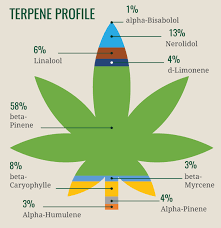
    Cannabis produces anywhere from dozens to over four hundred (400) individual terpenes within a single variety, and the types of terpenes within the different flowers play a major role in the effects experienced when they’re inhaled. People can smell the dominant aromas like citrus, pine, and “dank” (limonene, pinene, and myrcene) within the mix of terpenes when they smell cannabis, but they cannot smell the hundreds of individual terpenes on any given cannabis sample.

    Detecting terpenes is an art and science that suggests terpene groups can be physically felt in different parts of the face and that these qualities relate to a particular type of psychoactive effect. Terpenes are responsible for the different ways cannabis makes people feel, such as stimulated or sedated, including the effects in between.

    These differences are frequently and wrongly categorized as “Indica or Sativa.” Indica and Sativa are old-school categories for species or subspecies of cannabis; they are plant types, not effect types. The science behind the effects of different hybrid cannabis is based on the types of conglomerated terpenes present within different ratios that produce different effects.

    Say a sample of cannabis has one hundred (100) terpenes; each terpene has a certain chemical effect, and different strengths. D-limonene and A-pinene both produce uplifting effects, whereas linalool and myrcene produce relaxing effects. Consider this as an example; a green cannabis flower has seventy (70) stimulating terpenes with the other thirty (30) being more sedative in nature.

    With a 70/30 variance, the majority of the terpenes present should produce more of a stimulating effect. Detecting terpenes suggest that you can sense this 70/30 variance by paying attention to where the terpene molecules are felt to stimulate the trigeminal nerve.

    The art of detecting terpenes is to determine where the specific terpene ratio/clusters of terpene effect types are felt between the maxillary and ophthalmic zones of the trigeminal nerve; this assists in predicting the effect of the green flower.

    Attending to the stimulation in the face within these zones, in combination with their visual observations of the inflorescence and dominant terpenes noted by smell, allows a terpene detector to gauge the psychotropic spectrum of cannabis effects.

    Cannabis Green Flower Gas Chromatography

    Testing Cannabis Green Flower
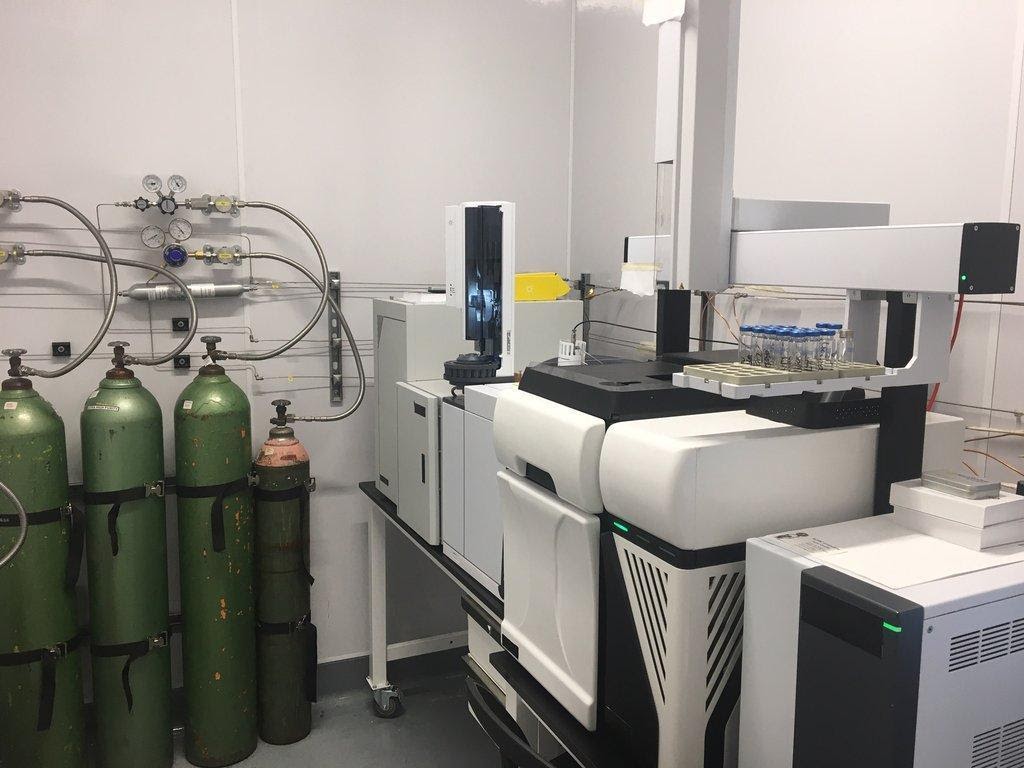
    Abstrax Tech Instrument room housing 2-dimensional gas chromatographic system for cannabis green flower media testing.

    Typically, cannabis industry labs use gas chromatography programs that read for 6, 12, 24, or 42 common cannabis terpene types, which is generally at the discretion or technical capabilities of the lab. What separates the Abstrax lab from other traditional cannabis labs is the number of terpenes they can detect.

    Abstrax invested millions of dollars and years of research to build a custom terpene supercomputer that can read and break down the hundreds of terpenes cannabis has – and more, what they mean.

    The Abstrax terpene test doesn’t just notice hundreds of other terpenes all other labs miss; they can see the terpenes from a bird’s eye view, whereas most other cannabis labs only have a one-dimensional plane of analysis.

    Abstrax’s process is a 2-dimensional gas chromatographic system coupled with mass spectrometry designed to create a 3D Metabolite Fingerprint™. Compared with traditional 1-dimensional gas chromatography – a method commonly used in analytical labs – 2-dimensional gas chromatography (2DGC) allows for much better separation of compounds, a requirement to correctly identify and quantify them.

    In short, the operating principle in 2DGC is to first separate compounds by molecular size, followed by the separation of these compounds further by polarity. This allows for much easier and more accurate identification of each compound compared with a simple 1-dimensional chromatogram.


    2D & 3D Cannabis Green Flower Chromatogram

    Green Flower Media Chromatogram
    Left: Chromatogram obtained from traditional 1-dimensional gas chromatography of green flower cannabis. Right: Chromatogram obtained from 2-dimensional gas chromatography.

    Abstrax can then analyze the 2D data in 3D to determine how much of each compound exists and the size of a peak corresponds to the quantity of a given compound.

    Each spot represents an individual compound. Over 400 terpene compounds have been found in some green flower cannabis strains such as Jack Herer and Gelato. With this new powerful analytical technique, Abstrax has discovered numerous important compounds in cannabis that have never been reported before.

    However, the most exciting aspect of this research has been the direct correlation between certain terpenes within cannabis and the effects (stimulating or sedative) they produce. Abstrax developed a metric they call “Strain Balance” to explain how the major components of a strain relate to one another.

    This allows for understanding how complex a given strain’s aroma may present itself and what lies behind it. The aroma of cannabis is not only pungent but extremely complex and difficult to describe. Abstrax finds that in general, strains with a small number of compounds accounting for a high percentage of the total aroma concentration lead to less complex, more targeted aromas.

    Conversely, strains that have more diversity in their highest concentration compounds often have more nuanced, complex aroma profiles. To approximate this, they introduce the Strain Balance Metric. This metric relates the top aroma compound concentrations to quantify how complex a strain profile is. This is calculated by conducting statistical analysis on the dominant terpenes and normalizing them from 0 – 100.

    This terpene metric allows Abstrax to compare strains and dissect their aromas, which is new for cannabis science and technology. Each detected terpene has a researchable and determining effect type programmed in the Abstrax database.

    When all the terpenes are calculated together, it gives a total effect type conclusion of that strain of cannabis. This means the cannabis industry doesn’t have to inaccurately guess the effect type based on strain names, Indica, or Sativa. Now, consumers select the effect they are looking for with their green flower cannabis.

    Let us know what you think.

  • Delta-8 THC is NOT Legal

    Delta-8 THC is NOT Legal

    The debate over Delta-8 Tetrahydrocannabinol’s (THC) legal status has divided the cannabis industry.

    Contrary to what we hear from the media, see in the stores, or learn from cannabis operators; and despite the incredible amount of Delta-8 THC products being sold across the country today, there is absolutely no grey area around the legality of Delta-8 THC.

    Delta-8 THC is NOT federally legal. Yet Delta-8 products are flooding the United States market more and more every day, and the companies producing them continue to grow at exponential rates.


    Schedule 1 Drug (THC Delta-8)

    Delta-8 is considered a Schedule 1 Controlled Substance by the United States Drug Enforcement Administration (DEA) because it is known to cause psychoactive impairment to the consumer.

    Because these products cause intoxication, they require a regulatory structure in line with state medical and adult-use cannabis programs.

    Despite the illegality, Delta-8 products have taken off as the newest way to get high. Since the distribution of THC Delta-8 products is not controlled, these products are being marketed and sold as if they were typical legal hemp products containing non-psychoactive cannabinoids, by licensed hemp companies and transported across state lines.


    Delta-8 Consumer Risk

    Unsuspecting consumers are being offered Delta-8 “shots” in their morning coffee at their local coffee shop while on their way to work, with no warning about the potential for impairment or how it might impact their ability to drive.

    Delta-8 gummies and vape cartridges are being sold in incredibly high doses to teenagers in vape shops and gas stations as if they are harmless hemp products that do not get you high.

    Not only are the consumers of these products being put at risk, but so are the unwitting business owners that are carrying these products, without an understanding of their liability for selling them.


    Quality & THC Delta-8 Safety

    Because Delta-8 products are federally illegal, they do not fall within existing regulations for hemp products, which means they are not required to contain warning labels or advise the consumer on the potential for impairment.

    It also means no one is monitoring the production of these products to assure only safe production practices are being used, or that the products being sold are of good quality.

    One needs only to perform a quick Google search to recognize the quality issues with Delta-8 products: there are hemp companies proudly marketing themselves as “the Delta-8 manufacturers who do not use bleach to create our products.”


    Confusing United States Cannabis Laws

    Like so many things related to cannabis, the confusion around the legal status of Tetrahydrocannabinol (THC) Delta-8 exists due to the conflict between state and federal drug laws. Cannabis remains a Schedule 1 Controlled Substance at the federal level in the United States.

    Due to this status, for the past decade, both hemp and cannabis operations have been required to comply with state-specific laws and regulations that vary greatly across the country.

    This means the cannabis industry (both hemp and cannabis) has paid very little attention to the existing federal laws, resulting in the former confusion around the legality of Cannabidiol (CBD) products and the explosive and dangerous situation happening with THC Delta-8 products.


    2018 Farm Bill & THC Delta-8 Legality

    Federal cannabis laws changed when hemp was fully legalized when the Agriculture and Nutrition Improvement Act of 2018 (referred to as the 2018 Farm Bill) was signed into law. The passage of the Farm Bill created a new, and somewhat broad, definition of hemp:

    “The plant Cannabis sativa L. and any part of that plant, including the seeds thereof and all derivatives, extracts, cannabinoids, isomers, acids, salts, and salts of isomers, whether growing or not, with a delta-9 tetrahydrocannabinol concentration of not more than 0.3 percent on a dry weight basis.”

    The clear intent of Congress, including overwhelming, non-partisan committee support in the House and Senate, was to provide another crop for America’s farmers to add into their rotation, so long as the crop and the products derived from hemp harvests were not intoxicating.

    Cannabis that causes impairment and intoxication was already distinguished from hemp, via state-legalized medical and adult-use cannabis programs, when the Farm Bill passed. This leaves no confusion about the legality of products containing Tetrahydrocannabinol (THC) in amounts that can cause intoxication.

    FDA THC Delta-8 Oversight

    Upon passage of the 2018 Farm Bill, confusion ensued because the passage did NOT impact or negate the existing laws and regulatory authority granted to other federal agencies as they relate to hemp and products derived from hemp.

    Initially, this confusion arose around the legality of Cannabidiol (CBD). The industry has now moved on to a different question: the legality of Delta-8.

    Congress explicitly preserved the FDA’s authority to regulate products containing cannabis or cannabis-derived compounds under the Food, Drug, and Cosmetics Act (FD&C), as well as Section 351 of the Public Health Service Act of 1944 (PHSA).

    Both of these Acts grant federal authority to FDA to oversee the safety of all food, drugs, medical devices, and cosmetics and to take legal action to stop the interstate commerce of products that involve a health or safety risk. They also prohibit adding the active ingredient of a drug into any food or beverage (including those for animals) intended for interstate commerce and prohibit those products from being marketed as dietary supplements.

    Further, FD&C Section 301 (II) defines active ingredients as ingredients used in previously approved drugs, as well as ingredients used in drugs that have undergone substantial clinical investigations. CBD is the active ingredient in the FDA-approved medication Epidiolex.

    Tetrahydrocannabinol (THC) is the active ingredient in the FDA-approved medications Marinol and Syndros, while Sativex contains both THC and CBD. Epidiolex has recently been de-scheduled from Schedule V of the DEA’s Controlled Substance List.

    As such, FDA concluded that adding THC or CBD into any food or beverage product (including animal food) intended for interstate commerce or marketing products containing Cannabidiol (CBD) or Tetrahydrocannabinol (THC) as a dietary supplement is prohibited.

    All of this confusion eventually prompted the release of a formal statement from the FDA Commissioner to clarify the situation:

    “We [FDA] treat products containing cannabis or cannabis-derived compounds as we do any other FDA-regulated products — meaning they’re subject to the same authorities and requirements as FDA-regulated products containing any other substance. This is true regardless of the source of the substance, including whether the substance is derived from a plant that is classified as hemp under the Agriculture Improvement Act.”

    It is clear from the statement above that Delta-8, as a cannabis-derived compound, regardless of whether that compound is derived from hemp or cannabis, falls under Food and Drug Administration (FDA) oversight.


    Cannabinoids Legality Under Farm Bill

    According to Food and Drug Administration (FDA), the cannabis plant, (both hemp and cannabis) is made up of biologically active chemical compounds, called cannabinoids.

    The most commonly known cannabinoids are Tetrahydrocannabinol (THC) and Cannabidiol (CBD).

    Even though the Farm Bill federally legalized hemp and removed it from the Controlled Substances List, the individual cannabinoids that make up the cannabis plant, remain Schedule 1.

    Tetrahydrocannabinol, or THC, is a psychoactive cannabinoid, which causes impairment. The psychoactive effects of THC are the reason cannabis was listed as a controlled substance under Schedule 1 status in the first place. It is because of THC’s impairment potential that the Farm Bill definition of hemp specifically included controls on the level of THC to differentiate cannabis plants as either (federally legal) hemp or (federally illegal) cannabis.


    THC Delta-8 & Analog Act

    Before the modern cannabis era, the Controlled Substances Analogue Act 21 U.S.C. § 813 was passed in 1986. This simple Act states that any chemical which is “substantially similar” to a Schedule 1 or Schedule 2 controlled substance shall be considered a “controlled substance analog.”

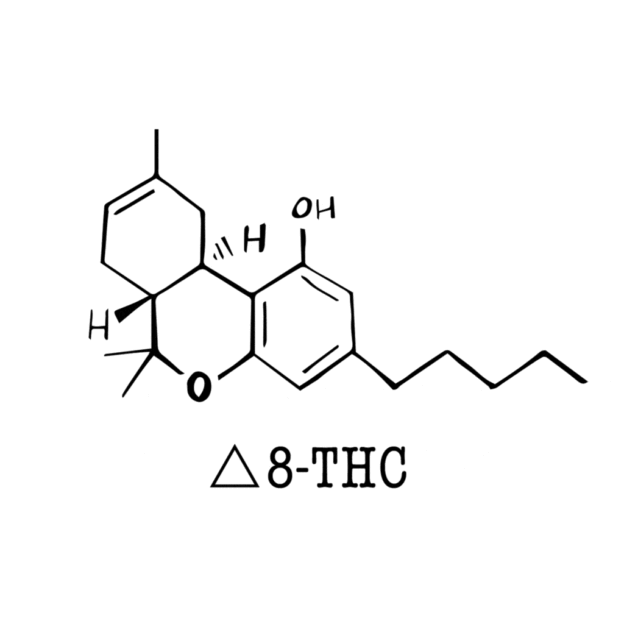
    Further, it states that all controlled substance analogs intended for human consumption be treated as if it is Schedule 1. The illegal status of Delta-8 THC and Delta-8 THC products at the federal level is also confirmed because Delta-8 THC is an analog of Delta-9 THC.

    This Act does not consider the source of the analog, removing the contrived suggestion that Delta-8 THC was unique if converted from federally legal hemp-derived Cannabidiol (CBD).


    THC Delta-8 & Drug Enforcement Agency (DEA)

    Even though the 2018 Farm Bill moved the regulatory oversight authority of hemp cultivation from the Drug Enforcement Agency (DEA) to the United States Department of Agriculture (USDA), and removed hemp from the Controlled Substances Act (CSA).

    Nothing has changed related to the scheduling status or legality of the Tetrahydrocannabinol (THC) contained within hemp or cannabis, to clarify this, the DEA stated the following:

    “The definition of hemp does not automatically exempt any product derived from a hemp plant, regardless of the D9 -THC content of the derivative. In order to meet the definition of “hemp,” and thus qualify for the exemption from schedule I, the derivative must not exceed the 0.3% Delta-9 THC limit. The definition of “marihuana” continues to state that “all parts of the plant Cannabis sativa L.,” and “every compound, manufacture, salt, derivative, mixture, or preparation of such plant,” are schedule I controlled substances unless they meet the definition of “hemp” (by falling below the 0.3% Delta-9 THC limit on a dry weight basis) or are from exempt parts of the plant (such as mature stalks or non-germinating seeds). See 21 U.S.C. 802(16) (emphasis added). As a result, a cannabis derivative, extract, or product that exceeds the 0.3% Delta-9 THC limit is a schedule I controlled substance, even if the plant from which it was derived contained 0.3% or less Delta-9 THC on a dry weight basis.”

    Even today, despite hemp being legal nationwide and the majority of states, having enacted laws legalizing the use of cannabis, THC is still listed as a Schedule 1 Controlled Substance by the DEA (7370 – page 10 line 7). This makes the 0.3 percent THC requirement contained within the legal federal definition of hemp such a critical issue – it is the dividing line between federally legal cannabis and federally illegal cannabis.

    Cannabis products containing LESS than 0.3 percent THC are federally legal when produced from hemp crops sanctioned by USDA and processed according to state and federal regulations. Cannabis containing MORE than 0.3 percent THC is NOT federally legal, regardless of origins from hemp crops or state-regulated cannabis programs.


    Synthetic Cannabinoids

    The 2018 Farm Bill clearly states that only hemp grown under USDA-sanctioned programs, and products derived from those hemp crops, are removed from the definition of “marihuana” and thus exempted from Schedule 1.

    This means that synthetically produced cannabinoids, including Tetrahydrocannabinol (THC), do not enjoy the same legal treatment, because they are not removed from the federal definition of “marihuana.”

    While definitions of conversion, synthesizing, and even manufacturing concerning cannabinoids are confusing, USDA recently provided clarification in the newly effective USDA Hemp Final Rule where it is expressly prohibited:

    “The [2018 Farm Bill] does not impact the control status of synthetically derived Tetrahydrocannabinol (THC) for “Controlled Substance Code Number 7370” because the statutory definition of “hemp” is limited to materials that are derived from the plant Cannabis sativa L. For synthetically derived Tetrahydrocannabinol (THC), the concentration of Delta-9 THC is not a determining factor in whether the material is a controlled substance. All synthetically derived Tetrahydrocannabinol (THC) remain a Schedule I Controlled Substances.”

    Thus, synthetically producing any Tetrahydrocannabinol (THC) is federally illegal and equates to creating a Schedule 1 substance. However, some in the cannabis industry believe there is a legal loophole in the definitions of synthetically produced cannabinoids and have produced several versions of legal opinions.

    These opinions have backstopped producers and retailers by providing a level of confidence – in an “aggressive” interpretation – which has led to this incredible Delta-8 THC product bubble that is sweeping the nation. The reality is that multiple federal laws address the legality of synthetically creating cannabinoids, in addition to state laws.


    Delta-8 Legality by State

    As stated in the Farm Bill, “states and tribal governments are authorized to put more restrictive parameters on the production of hemp but are not authorized to alter the definition of hemp or put in place policies that are less restrictive than this title.”

    This means, that while states can add more restrictive regulations to their hemp programs, they are not able to legalize the production of Delta-8 THC or Delta-8 THC-based products.

    As of March 2021, the month USDA’s Final Rule went into effect, eleven (11) states hemp programs had already expressly banned Delta-8 THC products as illegal:

    Both California and Oregon are in the process of enacting regulations for Delta-8 THC-based products.


    D-8 Products & D-9 Products

    State and federal regulations of Controlled Substances like alcohol and tobacco are meant to provide regulated distribution of those substances according to accepted standards that provide adequate protection for the health and safety of everyone involved.

    The distribution of cannabis products that are Controlled Substances (cannabis AND Delta-8 THC) should be no different.

    State-regulated recreational or medical cannabis programs provide the only legal route for Delta-8 THC production and distribution. As of today, there are no federal avenues to regulate Controlled Substances in cannabis, which is why they remain Schedule 1.

    Hemp farmers/processors wanting a truly legal pathway to participate in the Delta-8 THC market must convert hemp to Cannabidiol (CBD), then sell the CBD to state-licensed cannabis companies to produce and distribute Delta-8 products through the existing regulated market.

    Let us know what you think.

  • Cal/OSHA 30-Hour General Industry Training

    Cal/OSHA 30-Hour General Industry Training

    The cannabis industry, just like any industry, must be regulated for the safety of its workers. And while job growth prospects for California look promising, the cannabis industry is still relatively new and is constantly evolving. At the center of these industry changes, three (3) licensing authorities are responsible for licensing and regulating commercial cannabis activity in California:

    Under the Medicinal and Adult-Use Cannabis Regulation and Safety Act (MAUCRSA), and in addition to complying with all local regulations and ordinances, all cannabis businesses in California must have a State-issued business license from one of these agencies.

    Areas of operations within the cannabis industry include cultivation, distribution, laboratory testing, manufacturing, and retail. Many workplace hazards will be common to some or all of these industry subdivisions, but each will also have its own, unique hazards to consider.

    As the industry grows and more workers become involved in cannabis production, there is an increasing risk of workplace exposure to cannabis industry hazards.  Workers, especially those venturing into a new and complex industry, will not inherently be conscious of these hazards. It is the responsibility of the employer to appropriately train employees on all applicable safety protocols.


    Cal/OSHA 30-Hour General Industry Training

    California operates an OSHA-Approved State Plan, enforced by the agency commonly known as Cal/OSHA. California also has its versions of federal OSHA industry-based training programs, one of these being Cal/OSHA 30-Hour General Industry Training. This program was adapted from the Federal OSHA Outreach Training Program but is enforced through Cal/OSHA.

    The training must cover certain topics that are designed to help prevent occupational incidents by increasing awareness of and familiarity with safety and health hazards encountered generally in any cannabis industry workplace. Some training topics include health hazards, industrial hygiene, ergonomics, and electrical hazards.

    For those operating within the cannabis industry, at least one supervisor and one employee are required to complete the Cal/OSHA 30-Hour General Industry Training, per Bureau of Cannabis Control (BCC) (16 CCR, Div. 42), California Department of Food and Agriculture (3 CCR, Div. 8, Ch. 1), and California Department of Public Health (17 CCR Div. 1, Ch. 13).

    For those outside looking into the regulated cannabis industry, the program is voluntary in the state of California and does not meet the training requirements for any OSHA standards. However, several U.S. states and some contractors, municipalities, and other entities do require its successful completion. Training programs are recommended to span a wide range of topics but should devote particular attention to the hazards specific to the tasks employees are expected to perform.

    Critical Cannabis Industry Training

    Several sections of training covered within the Cal/OSHA 30-Hour General Industry Training would be especially beneficial if provided to all cannabis industry employees, but this program is not intended to fulfill all employee training requirements. The following are some of the most common cannabis industry hazards. While these hazards are present in many other industries, cannabis workers are recommended to receive additional training regarding these hazards due to the fluctuating and complex nature of their industry.

    Slips, Trips, and Falls

    Slip, trip, and fall hazards are common in any industry. According to the United States Department of Labor (DOL), they make up the majority of general industry accidents. The potential for these same-level incidents exists when unintended or unexpected changes occur between the feet and the walking surface. Some examples include items blocking pathways, loose mats, and wet walking surfaces.

    Slip, trip, and fall hazards can come in many forms in the cannabis industry. For example, a cannabis harvester may encounter a slip hazard while conducting their work if the crops have been watered recently, or a cultivator may leave the power cord for an Ultra-Violet (UV) lamp unsecured, which could pose a trip hazard.

    Walking-working surfaces training highlights and reinforces to affected employees the need for careful consideration of these potential hazards. Other training programs that may be helpful to mitigate these cannabis industry hazards include fall protection, Personal Protective Equipment (PPE), and housekeeping practices.

    Cultivation Pesticides

    Under California law, a pesticide is any substance intended to, “control, destroy, repel, or otherwise mitigate a pest.” Whether they be animals, insects, plants, or other organisms, pests can cause damage and economic loss when introduced into an environment. Understandably, a cannabis operation would want to protect its high-value products from such pests.

    Just as pesticides are a concern for consumers, pesticide exposure for cannabis workers – such as cultivators, trimmers, or budtenders – is also a growing issue. And while the Environmental Protection Agency (EPA) has not registered any pesticide for use on cannabis, the California Department of Pesticide Regulation (DPR), in compliance with the California Food and Agricultural Code (FAC), has developed standards for the use of certain pesticides and maximum tolerances for said pesticides in harvested cannabis.

    The use of any pesticide that violates the FAC may result in large penalties. Respiratory protection training is the best way to ensure that employees working with pesticides of any kind are doing so in a safe and compliant manner. Respiratory protection training may also help with an allergen, mold, or irritant hazards. Personal Protective Equipment (PPE) and hazard communication training may be needed as well.

    Machinery & Powered Industrial Vehicles

    Machinery-related cannabis industry hazards are primarily associated with manufacturers – particularly within the extraction process. High heat and pressure are used in extraction processes, creating fire and explosion hazards. Extraction typically involves the use of high-pressure machinery, butane, Carbon-Dioxide (CO2), and/or flammable/combustible liquids, all of which are hazardous.

    Proper Lockout/Tagout (LOTO) practices and procedures safeguard workers from the release of hazardous energy that machines can store. LOTO can help prevent serious injuries, but only if those procedures are properly implemented. LOTO training is the best way to ensure that employees properly carry out the procedures.

    Additionally, employees who regularly deal with large machinery should receive regular Personal Protective Equipment (PPE) and machine guarding training. Powered Industrial Vehicles (PIVs) like trimmers, forklifts, or motorized hand trucks are often used in the cannabis industry to quickly and efficiently transport products or equipment.

    These types of vehicles or trucks pose not only operator-error hazards but also improper care or maintenance hazards. Keep in mind that only trained and certified workers may operate a forklift. Safe operation is typically covered for powered industrial vehicles or truck training, which is designed to help an employee better understand safe operation practices when undertaking these tasks.


    Beyond Cal/OSHA: Additional Cannabis Industry Hazards

    Introduction to OSHATogether with Cal/OSHA employee training, cannabis businesses must develop and maintain certain documents such as a Waste Management Plan, Injury and Illness Prevention Program, Hazardous Materials Business Plan, and Emergency Action Plan.

    Many cannabis businesses will need to perform waste characterization, identify compliant waste disposal procedures, and engage in proper recordkeeping and housekeeping practices regarding the transportation of cannabis products. The following are a few additional considerations that may be applicable to cannabis businesses:

    • Hazardous Waste Management: Training that covers recordkeeping and management requirements, waste classification, container, and tank management, and tiered permitting.
    • Universal Waste Management: Training that covers the generation, accumulation, treatment, and disposal of common waste designated as “universal,” such as batteries or electric lamps.
    • DOT Hazmat Employee: Training that covers hazardous materials transportation regulations, the Hazardous Materials Table, emergency response requirements, preparation of shipping papers, and marking, labeling, and placarding.
    • Uniform Hazardous Waste Manifest: Training that covers completion, retention, and distribution of the Uniform Hazardous Waste Manifest under the e-Manifest system for California hazardous waste shipments.


    Cannabis Industry Hazards Training

    A 2018 study from Colorado State University found that around 46% of legal cannabis industry workers surveyed reported they received “little to no” safety training since the beginning of their employment.

    Cannabis industry hazards present themselves in a multitude of forms; providing regular, function-specific, and effective safety training is a vital component of all employers’ efforts to protect their employees and their businesses.

    California business owners should strive to attain and maintain a safe working environment for their employees. For regulated cannabis businesses in California, they will need to be provided the Cal/OSHA 30-Hour General Industry Training required by the Bureau of Cannabis Control (BCC), California Department of Food and Agriculture (CDFA), and California Department of Public Health (CDPH) regulations as codified in the California Code of Regulations.

    Though aimed broadly at all industries, this training program caters to the job functions commonly performed in cannabis operations.

    Let us know what you think.

  • Cannabis Industry Extraction Methods

    Cannabis Industry Extraction Methods

    Extraction techniques are used to separate the components of cannabis and remove them from the plant matrix. Various methods can divide cannabis plant material into parts, or extracts, that contain different chemicals.

    With cannabis, extraction techniques are often used to isolate specific desirable compounds, and cannabis contains at least 100+ cannabinoids, including Cannabidiol (CBD) and Tetrahydrocannabinol (THC).

    On the other hand, a producer may seek to create a single extract with many desirable cannabis compounds; sometimes called whole plant extracts. Including the better-known cannabinoids, scientists have identified more than 500+ chemicals in cannabis in general including components like terpenes. Extraction techniques are also used to concentrate chemicals of interest.

    Before discussing these methods, you should keep in mind that cannabis extraction is chemistry, not cooking. So, some skills in analytical methods plus real lab equipment are required to perform these methods correctly and safely. In many cases, the reagents and how they are used can create dangerous situations.

    Consequently, many of the techniques require safety equipment, like a fume hood. Just as important, the extraction process must be performed correctly to produce a safe product for human use, and the results should be confirmed independently with proper analytical cannabis testing.


    Cannabis Alcohol Extraction

    Several common forms of cannabis extraction rely on a solvent, such as alcohol. In brief, the cannabis soaks in alcohol, usually ethanol, the plant material is then removed, the liquid filtered, and the alcohol is removed with some form of evaporation.

    One of the biggest challenges is the inherent polarity of solvents like ethanol – meaning it has the propensity to mix with water and dissolve molecules like chlorophyll. Removing chlorophyll from the extract is important as it produces an undesirable, bitter flavor.

    This method can be performed at atmospheric pressure, but the temperature is carefully controlled, especially during evaporation. This process can also take time and must be done carefully to avoid danger as ethanol is highly inflammable.

    One of the biggest benefits of this form of extraction is that there is no risk of leaving toxic residual chemicals in the final cannabis extract and, it enables the co-extraction of all compounds of interest, chiefly cannabinoids, and terpenoids.


    Carbon-Dioxide (CO2) Cannabis Extraction

    Using a reagent of any kind can add cost and clean-up time, so various techniques should be considered, and one is Carbon Dioxide (CO2) extraction. Instead of using alcohol, this method removes cannabis components from the plant matrix with carbon dioxide.

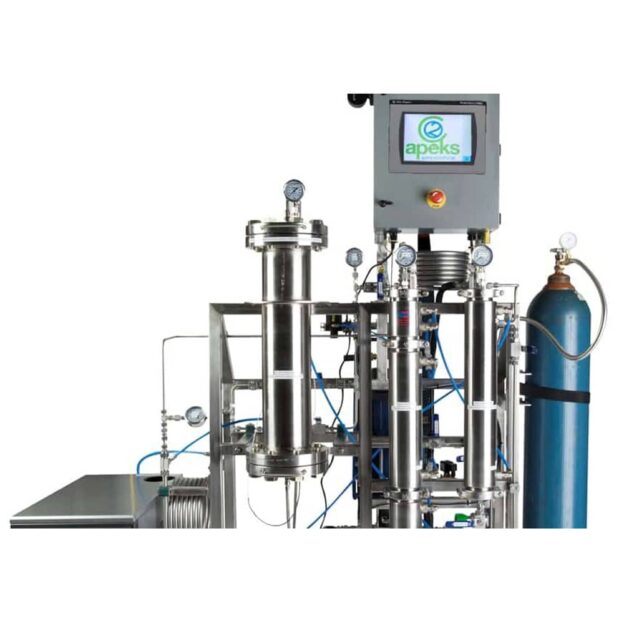
    Here, though, high pressure and heat are used to turn the CO2 supercritical – meaning it is simultaneously like a liquid and a gas. The equipment cost for this method is orders of magnitude higher than alcohol extraction, but it produces higher yields and less valuable material is lost.

    Plus, this method can be adjusted to extract specific compounds by changing the temperature, pressure, or runtime – more likely a combination of these. Moreover, one study found that different compounds get concentrated at different rates in the same process.

    So, the extract should be analyzed, especially where concentrations of specific compounds are desired. With the cannabis components extracted, the supercritical CO2 goes into a condenser and turns into a liquid that can be filtered and used again. Consequently, the very little reagent is used.

    That makes this method economical to run and reduces the need to dispose of waste. In addition, if any CO2 remains in an extract after the process, it just evaporates. That is especially important for any preparations for medical uses as a producer using this method can guarantee that absolutely no residual solvent will be present in the final product.

    Cannabis Butane & Propane Extraction

    Using butane as the extraction solvent creates what is known as butane hash oil. To do this, the process starts with cannabis and liquid butane in a pressurized and heated system. By using evaporation under a vacuum, it is then possible to remove the butane solvent.

    The vacuum turns the butane from liquid to vapor, making it easier to remove. This kind of extract is also known as shatter, which is a clear material that typically includes Tetrahydrocannabinol (THC), Cannabidiol (CBD), and other chemical components, including terpenes.

    To make shatter, which is a hard version of butane hash oil, terpene content must be kept low or it works like a solvent that makes the extract soft. The right starting sample can help to reduce the terpenes present in the final product, such as by starting with cured flowers.

    On the other hand, butane hash oil can be heated to remove terpenes after extraction as they are more volatile than cannabinoids like THC and CBD. Even without any added steps, this method includes some potential hazards. For one thing, butane burns easily in its gas phase.

    So, the temperature used must be managed carefully otherwise there is a serious risk of the gas exploding. In addition, a system should include circulators that remove and recycle the butane. The removal process should reduce any residual butane in an extract. In all cases, though, analytical testing should be done to ensure butane’s removal, because it is highly toxic to humans.

    That danger can make this method a less desirable choice, especially for medicinal products. Increasing analytical testing and tighter regulations on acceptable residual butane levels could limit this method for many applications – unless, the user takes special precautions to limit any residual butane in the product and uses third-party analytical testing to confirm the safety of an extract.

    Nonetheless, butane extraction has been a popular method for extract producers and enthusiasts for years, largely due to the relatively low equipment and running cost. And, the fact that it produces flavorful extracts with higher terpene content than can be achieved by Carbon-Dioxide (CO2) extraction, for example.

    Instead of butane hash oil, some manufacturers opt to produce propane hash oil. In this method, liquid propane is used in place of butane. Here, high pressure keeps the propane liquefied and extraction occurs at a lower temperature because propane’s boiling point is less than butane’s.

    The extraction temperature impacts the components removed from cannabis. So, these two similar methods – butane and propane extraction – produce dissimilar extracts. In some cases, butane and propane extraction can be used in combination to create a product with a broader chemical profile.

    Like the butane process, though, special care must be taken with propane extraction to remove as much of the chemical as possible and prove it.


    Solvent-Free Extractions

    It is worth mentioning that more basic techniques also exist for preparing cannabis and extracting desirable components from the plant matrix.

    Kief, for example, can be separated from cannabis buds simply by grinding and sieving. These crystalline formations make up part of structures known as trichomes which are found on many plants, including cannabis.

    Cannabis trichomes are primarily protective structures produced by female plants when flowering. Their intense bitter taste and strong aromas render the plant unpalatable to herbivores and, they are also believed to inhibit some fungal growth. When separated from cannabis inflorescence, kief looks just like a powder or pollen.

    And, as cannabinoids and terpenoid production are particularly concentrated in trichomes this powder can be added to cannabis preparations to boost potency or consumed alone as a standalone product. Traditional hash, or hashish, is another example of a solvent-free, more basic cannabis extract.  Again, the idea is to separate the trichomes from the plant material as they contain the highest concentration of desirable compounds.

    Two (2) main methods exist for creating a hash, one involves taking frozen cannabis buds and breaking them into smaller and smaller parts over a screen. In the process, trichomes are separated from the plant and fall through the sieve, and then pressed into blocks. The other primary method of solvent-free hash extraction involves using ice water to separate the trichomes from the bud. After drying they can then be pressed in a hash block.

    Rosin has also become very popular over the last couple of years. Produced from flowers, hash, or kief, rosin is a translucent substance typically with a sap-like consistency. It’s made by applying heat and pressure to the material you wish to extract from and results in a product that’s very similar to the more time-consuming, expensive, and, solvent-based butane extraction.

    Analytical testing has demonstrated that this simple approach effectively extracts cannabinoids and terpenes with absolutely no risk of leaving behind toxic residual solvents like butane. The simplicity of this approach is without a doubt its biggest draw. Enthusiasts can produce highly potent rosin extracts with a hair straightener, some baking parchment, a collection tool, and, some heatproof gloves.

    Commercial rosin presses are also available to process material on a much larger scale, but the concept is essentially the same. A flat heat press machine is used to squeeze the material but at a specific heat and pressure and the extract is scraped off.

    Let us know what you think.

  • Cannabis Dispensary Records Management

    Cannabis Dispensary Records Management

    This discusses the importance of maintaining a comprehensive and organized record management system. It describes the key records management procedures and requirements.

    Including records management for digital files and physical files, a records inventory list, and patient records for medical dispensaries.


    Importance of Records Management

    Operating a business involves a host of transactions, contracts, purchases and sales, tax filings, and numerous other processes for which records must be kept. To effectively operate a business – and to comply with applicable federal, state, and local laws – the business must maintain these records in an organized, safe, and secure manner.

    Business Risks

    Implementation of a Records Management System is not simply a matter of staying organized. Damage to or loss of records can lead to legal liability or lawsuits. In the case of a cannabis operation, these consequences could potentially lead to the loss of licenses that allow the business to operate at all.

    In the case of a medical dispensary, there are additional legal requirements involving compliance with patient records. Failure to implement an organized, safe, and secure Records Management System can be fatal to the business.

    Managing Risk

    The importance of a Records Management System for cannabis businesses cannot be overstated. The risks posed by improper records management are not just a matter of lost profit but can lead to loss of licenses and possibly force the closure of the business (that’s why cannabis dispensary training is so desperately needed).

    If the operation is a medical dispensary, additional records management requirements apply to patient records. Good managers should maintain an effective Records Management System:

    1. Records Inventory List
    2. Destruction Process
    3. HIPAA Compliance

    An effective Records Management System is necessary for the longevity of every business, especially a cannabis business. An organized, safe, and secure Records Management System will minimize the risk of lawsuits or other legal liability that could be fatal to the business.


    Records Management

    Records management is critical for maintaining an orderly operation and complying with applicable laws. For this reason, every operation must maintain a Records Management System and follow established procedures.

    An effective Records Management System will ensure the organized storage, retention, and protection of all records and supporting data. Every Records Management System must include the following:

    1. Records Inventory List: The Records Inventory List is a master list of all records and control requirements.
    2. Destruction Process: The Records Management System must include policies on retention time and destruction/deletion methods of all records.
    3. HIPAA Compliance: Patient records control and destruction requirements by HIPAA.

    Given the prevalence of digital records in a modern business, the operation must have specific procedures for the management of all digital files. Below you’ll learn the specific procedures relating to digital files that must be included in every Records Management System:

    1. System Access Controls
    2. User Controls and Tracking (Viewing, Printing, Editing, and Deleting)
    3. Standard File Labeling and Organized Storage Hierarchy
    4. Data Encryption
    5. File deletion schedules and processes including deletion of data on obsolete computers and data storage devices.
    6. Data Backup: Cloud Storage, Digital Storage Service, Offsite Storage (of Backup Hard Drives)
    7. Automatic File Backup
    8. Long-Term Protection and File Integrity

    Physical Records Management

    In addition to the procedures for digital files, the Records Management System must include specific procedures for physical records. So you’ll need to learn the specific procedures relating to physical files that must be included in every Records Management System.

    1. Restricted Storage Areas
    2. Lockable Filing Systems
    3. Sign-In/Sign-Out Procedures for File Review/Removal
    4. Organized Filing Systems
    5. Physical Records (filed promptly)
    6. Destruction Schedules and Processes
    7. Crisis Protection
    8. Long-Term Storage and Environmental Controls

    Worker Responsibilities

    • The operation must assign a worker to manage the records system, and the worker must have the time allotment, skills, and experience to adequately meet the position requirements.

    Management Responsibilities

    • Management must conduct a self-assessment of the records process at least every 90 days, document the assessment, and complete any corrective action.

    Legal Compliance

    All records management procedures must comply with applicable federal, state, and local regulations. Records management is critical for maintaining an orderly operation and complying with applicable laws.

    Every operation must implement a Records Management System that includes specific procedures for digital files and physical files.

    The operation must assign a worker to manage the records system and a manager to conduct a self-assessment every 90 days. Next, we will learn about creating a Records Inventory List.

    Records Inventory List

    To ensure that all records are included in the Records Management System, the operation must list all records used or received by the business on a Records Inventory List. The Records Inventory List should identify the following aspects of the records:

    1. Each Record (by title)
    2. Persons/Positions Authorized (to view the record)
    3. The Revision or Deletion Authorizations
    4. Retention Period
    5. Destruction Method
    6. Storage and Back-Up Requirements
    7. Record Location
    8. Other Controls (as required)

    Records Identification

    The Records Inventory List must identify all records related to the categories listed below. There may be multiple records per category. 32 categories have been grouped into related fields. Below we’ll learn the 32 categories of records that must be identified by the Records Inventory List.

    Finance

    The Records Inventory List must include the following financial records:

    1. Accounting Ledgers and Reports
    2. Tax Returns, Tax Correspondence, and Supporting Information
    3. Payroll and Wages

    Legal

    The Records Inventory List must include the following legal records:

    1. Contracts and Agreements
    2. Corporate Organization, Bylaws, Organization Charts
    3. Insurance
    4. Intellectual Property
    5. Legal Files, Court Documents, Attorney Files
    6. Public Filings
    7. Security Records

    Electronic

    The Records Inventory List must include the following electronic records:

    1. Logins and Electronic Permissions
    2. Electronic Mail

    Employment

    The Records Inventory List must include the following employment records:

    1. Employment and Worker Files
    2. Training Records and Program Documentation
    3. Safety and Health (OSHA, worker’s comp, medical, SDS)

    Operations

    The Records Inventory List must include the following operations records:

    1. Audit Reports, Inspection Reports, and Self-Assessments
    2. Quality Control Procedures, Logs, and Records
    3. Vendor Records
    4. Customer Information
    5. Patient/Customer Records
    6. Inventory Records

    Product

    The Records Inventory List must include the following product records:

    1. Production Records
    2. Product Test Data and Test Lab Reports
    3. Product Transfers
    4. Test Method Documentation (Lab Only)
    5. Sample Management and Control Records

    Sales and Communication

    The Records Inventory List must include the following sales and communication records:

    1. Sales and Marketing Plans
    2. Sales Transactions
    3. Press Releases

    Facility and Equipment

    The Records Inventory List must include the following facility and equipment records:

    1. Maintenance Logs for Facilities and Equipment
    2. Calibration, Maintenance, and Repair Logs
    3. Sanitation Logs

    To ensure that all records are included in the Records Management System, the operation must list all records used or received by the business on a Records Inventory List. The List must identify the records using several aspects of the records. 32 categories of records must be included in the Record Inventory List.


    Patient Records

    As has been discussed in this module, all records management must be done in compliance with federal, state, and local laws. For medical dispensaries, one such law is the Health Insurance Portability and Accountability Act of 1996 (HIPAA). A medical dispensary must manage patient records according to HIPAA regulations.

    HIPAA Compliant Procedures (United States)

    The operation must have procedures and controls for all Protected Health Information such as:

    • Medical Record Numbers
    • Contact Information
    • Diagnosis Codes
    • Patient Verification Information (ex. Driver’s License, Passport, etc.)
    • Data Security

    To protect patient records, the operation must install and use website security (SSL Certificate) or similar for patient data access or Internet transmission. Procedures must control patient verification system access and output. Compliance with HIPAA regulations for medical dispensaries requires additional procedures for patient records.

    Let us know what you think.

Do NOT Grow Another Plant Until You've Enrolled Into This! 💯
Cannabis Horticulture
A Carefully Curated Cultivation "Crash Course" On Everything You Need To Crank Out High-Yielding, "Cannabis-Cup Winner" Flowers That'll Generate HUGE Crops All-Year Long
Crafting Cannabis-Infused Edibles Takes MORE Than Ingredients... 🍽️
Edible Cannabis Products (100% FREE Training)
Enthusiasts Face Challenges Navigating An Ever-Expanding Array Of Cannabis Products & Delivery Methods From "Raw Flower" Smoothies To Infused-Edibles, Cannabinoid-Based Drinks + MORE.