Category: What’s New

  • Cannabis Industry Business Plan Development

    Cannabis Industry Business Plan Development

    Today we hear from our Subject Matter Expert (SME) Rachel Johnson from Boost Business Plans who has done some awesome work in the cannabis industry and has personally written over 100 business plans and proposals.

    [See Our NEW Cannabis Business Plan Training Here]

    She has been writing business plans for the cannabis industry for several years and has seen a lot of the “ins and outs” when it comes to applying for a license with the city and also presenting a plan to attract an investor. In both cases, you need to make sure that your cannabis business plan is clear.

    It needs to show that you have done all of your research, you are very well positioned and prepared, and that you not only want to operate a successful cannabis business – you want to comply with city and government law while all the while giving back to the community.

    Writing your business plan may seem daunting, but when you take the “scariness” aspect out of it, it’s much easier to get it done. You’ll find it easier to break it down into sections so that you are writing your business plan step by step. If you look at the project and think it’s overwhelming, this can help. Instead of thinking “I have to complete writing an entire business plan” you can think “I need to complete my Company Summary”.

    Now, the most common one in my experience is for start-ups. This is if you need a business plan to present to a prospective investor or any other private entity to acquire funding to start a cannabis business. This could be for a dispensary, a processing lab, a testing lab, a distribution business, a cultivation, or a social consumption lounge. This can also apply to businesses that cater to the cannabis industry, but do not deal with cannabis products directly.


    Cannabis Business Plan Executive Summary

    Think of an executive summary as a truncated version of your entire business plan – a “snapshot” if you will. It touches on a few main topics to entice the reader to find out about those topics in further detail later in the plan. However, you may have heard of scenarios where some prospective investors only look at the Executive Summary as they do not have the time to pour through the business plan in its entirety.

    That is why this section must be a solid clear and concise representation of your idea or business. Generally, you’ll write this section last after you have written a business plan. Why do you ask? Well, you will have already done the bulk of the work and research in all of the other sections, so it is easier to pull excerpts from those other applicable sections and polish them in the Executive Summary, with emphasis on the word “Summary”.


    Cannabis Business Plan Introduction

    The introduction should say who you or your organization is and what you do within a couple of paragraphs. What is your company’s name? What business are you in? Who are the owners and where is the company located? Why are you passionate about this business?

    For example, you would write:

    “The Green Butterfly will be a dispensary serving a vast variety of cannabis items in the City of Glendale. The founders and owners, Jane Smith and John Smith, are experienced business owners who both have a passion for finding the highest quality cannabis products on the market. The product mix will include more typical items such as flowers, concentrates, and packaged edibles, as well as fresh beverages and foods under The Company’s brand. Products will be sold to consumers of a qualified age, in both the local Los Angeles market and tourists alike. Having lived in Glendale most of their lives, they felt that dispensary options were not easy to come by. Seeing the obvious hole in the market, they decided to apply their skills and business savvy and open their first cannabis dispensary together.”

    So to sum it up, you have explained:

    • What: A dispensary called The Green Butterfly
    • Where: In the City of Glendale
    • Who: Jane and John Smith, experienced business owners
    • Why: Limited options and a passion for offering high-quality cannabis products to the community.

    You can go into more detail of course but we wanted to give you a jumping-off point. Who is your target market customer? What are the current trends? This is where you need to do some research. How many cannabis consumers reportedly are there out there? In your local area? Are there any other dispensaries in a neighboring town and if so, what are their drawbacks?

    For example: Are they not open seven days a week? Do they not have a lot of product options? Are they not conveniently located? You need to establish that there is a large demographic out there that your establishment would appeal to. And keep in mind, pointing out that there are also additional potential cannabis tourist customers can’t hurt.

    Cannabis Industry Snapshot

    This is a snapshot of what the cannabis industry is up to. For example, what are the reported sales within the last year? Where do analysts think the industry will go in the upcoming year? What are the reported statistics? Now, please note: Keep a record of your sources and where you pull any data from as a backup.

    Some investors may say “Say, where did you find that information and where can I find out more?” It’s always better to be prepared with answers as it makes you be and seem more professional, well-prepared, and knowledgeable about your target market.


    Cannabis Business Financial Plan

    This is normally a short statement, but it can be more elaborate. How much money will you need to start the business? What would it be used for? For example: “The Green Butterfly plans to raise capital from investors for $875,000 to fund real estate, initial inventory, marketing, operations, and dispensary build-out expenses.”

    Of course, keep in mind this is a “snap-shot” of your business plan. Your details of these sections will be more explained in the body of the plan. In the start-up section, you can write a brief description of what you will need to start your company.

    For example, if you are opening a restaurant and bar, you will need funding to lease a space to operate, stock inventory, supplies, furniture, liquor license, permits, security, point-of-sale systems, and more. It doesn’t have to go into too much detail.


    Cannabis Business Products and Services

    The products and services section is where you have to explain what you are offering. It can be a service that you provide or a product that you sell. If you are an expert in your field, but talk in layman’s terms. You should know your product, service, and industry well, but don’t expect your potential funders and partners to have the same level of knowledge.

    Assume the reader doesn’t know as much as you when you explain what you’re offering. Avoid acronyms, slang, and jargon when outlining your products and services. The Market Analysis Summary is one of Rachel’s favorite parts of the business plan. We know, we know, we sound a bit like a geek, but this is where you learn about your industry and target market’s buying patterns.

    You pretty much learn something new every time, as your industry’s market is ever-changing. New reports are released every day. New studies are constantly being performed. A new target market segment that wasn’t known before can be identified. And as you write this section, you will make some sometimes surprising discoveries!


    Cannabis Business Management Summary

    The Management Summary is the section where you will detail YOUR managerial experience and training. This doesn’t have to be an actual resume. Think of this as a snapshot of your career, relevant experience, education, or even a passion for the cannabis culture movement even.

    Have you gone to trade shows or conventions in your business industry? Did you come across unexpected health benefits of medical cannabis during an experience that you happened to have dealt with in life? In this section, you have to sell yourself and your business partners on the premise that you are the right people to get the job done.

    The profit and loss statement starts with any cash inflows that you have. After you find your total cash inflows such as from your sales, you then reduce this amount by the costs you had during the year to make the sales and reduce it again by subtracting your operational costs. Rachel has written hundreds of business plans over the years for all sectors of the cannabis industry including dispensaries, distributors, cultivators, processors, testing labs, and social consumption lounges.

    [Editorial Note: Boost Business Plans was created by Los Angeles native Rachel Johnson. She has worked in the finance world in a vast array of industries for over 19 years. Rachel has consulted entrepreneurs, entertainment entities, and private estates and has personally written over 100 business plans and proposals since 2010 alone. On behalf of her clients, she has attained funding from Small Business Administration (SBA) lending, grants, angel investors, venture capitalists, and more.]

    Let us know what you think. 

  • Cannabis Industry Annual “Historic” Update

    Cannabis Industry Annual “Historic” Update

    While the pandemic’s impact remains top of mind for most of us, cannabis businesses have also faced wildfires, early frosts, labor shortages, licensing delays, and much more this year. We all have had our challenges in 2020, yet the industry has had its share of wins too.

    As lockdowns spread across the country, cannabis businesses were deemed essential in most jurisdictions, acknowledging the value of the products our industry provides. Dispensaries successfully adapted their operations to constantly changing public health guidelines and safely provided medicine to patients amid the pandemic via online ordering, curbside pickup, and delivery services.

    Cannabis won the election! Voters approved legalization measures in five states opening the door to an estimated $3.1 billion of combined sales by 2025 (Arcview). Support for legalization reached an all-time high in the United States, with 68% of Americans in favor of adult-use cannabis (Gallup). In a historic vote, the United Nations (U.N.) Commission on Narcotic Drugs (CND) rescheduled cannabis under the 1961 Single Convention, recognizing its medicinal value.

    As we look to 2021, we expect further consolidation in cannabis markets globally as operating capital is stretched thin for smaller producers. While many are optimistic about legalization at the federal level in the United States, we don’t think change is likely in 2021. Below is a list of markets that are opening or have the potential to legalize next year.

    United States

    Arizona

    • Non-profit medical marijuana dispensaries and entities operating within counties with fewer than two non-profit dispensaries will submit their applications between January 19, 2021, and March 9, 2021.
    • Twenty-six social equity licenses will become available to “individuals from communities disproportionately impacted by the enforcement of previous marijuana laws” within six months of adopting the rules.

    California

    • License applications for up to 16 retail dispensary permits in Oxnard are due by 6:00 PM PT on January 7, 2021.
    • New municipal markets include Banning, Encinitas, Fullerton, La Habra, Ventura County, and Weed.
    • More municipalities are drafting cannabis business ordinances, with many likely to pass in 2021.

    Connecticut

    • In 2021, Democrats will fill 98 of the 151 House seats and 24 of the 36 Senate seats. The state’s lawmakers will have strong support to pass a legalization bill.
    • Connecticut will likely act fast to ensure it can compete with adult-use cannabis programs in neighboring states.

    Maryland

    • Delegate Jazz Lewis (D) pre-filed a bill to legalize and regulate adult-use cannabis and allow sales by state-licensed medical cannabis businesses.

    Massachusetts

    • Open licensing based on host community agreements.
    • Delivery-only licenses are available exclusively to businesses controlled and majority-owned by Economic
    • Empowerment Applicants or Social Equity Participants.

    Michigan

    • New municipal opportunities are on the horizon, including Detroit in early 2021.
    • Starting on March 1, 2021, the Marijuana Regulatory Agency will begin accepting applications from companies not currently involved in its medical marijuana program.

    Mississippi

    Montana

    • Regulators have until October 1, 2021, to establish rules for the recreational cannabis program. Only existing medical operators will be able to apply for licenses in 2021.

    New Jersey

    • The current legislation to set New Jersey’s adult-use cannabis program into motion has stalled on Governor Phil Murphy’s desk.
    • Once the bill passes, the Cannabis Regulatory Commission will have 180 days to implement rules.
    • Existing Alternative Treatment Centers (ATCs), vertically-integrated non-profit medical license holders, will have first access to adult-use licenses.

    New Mexico

    • Gov. Michelle Lujan Grisham supports adult-use legalization and will be working with the legislature next year to get a bill to her desk. According to polling data, 72 percent of New Mexico residents favor legalizing, taxing, and regulating cannabis sales.

    New York

    • Gov. Andrew Cuomo planned to legalize cannabis in 2020, but the pandemic forced efforts to the back burner. With legalization on New Jersey’s horizon, Cuomo has renewed his commitment to getting a legalization bill passed in New York in 2021.

    Pennsylvania

    • Gov. Tom Wolf has called for adult-use legalization to help the state’s struggling economy. It will be tough to get a bill through the Republican-controlled legislature, but some state senators have expressed their support.

    Rhode Island

    • Gov. Gina Raimo had included adult-use legalization in her state budget plan for 2020, which the Senate opposed. Lawmakers have recently expressed support for legalization to help with economic recovery amid COVID-19.

    South Dakota

    • The new medical and adult-use cannabis laws go into effect on July 1, 2021. That said, we expect that it will be some time before licensing and operations begin. It will likely be 2022 before applications are accepted.

    Texas

    • Several cannabis bills have been pre-filed ahead of the 2021 session. One would expand the state’s restrictive medical cannabis program another seeks to legalize adult-use cannabis.

    Virginia

    • Gov. Ralph Northam plans to introduce an adult-use cannabis bill in 2021. According to Virginia Mercury, the House of Delegates could likely pass the bill. At the same time, Senate Majority Leader Dick Saslaw said that it would have “slightly better than 50-50 odds” in the Senate.

    International

    Mexico

    • In 2019, the Supreme Court of Mexico mandated that lawmakers legalize adult-use cannabis in the country.
    • The deadline to legalize was recently extended for the third time until the end of the next ordinary session, ending in April 2021.
    • We expect Mexico to legalize adult-use cannabis in 2021.

    Netherlands

    • The government selected ten cannabis growers to participate in its cannabis experiment.
    • Selected growers are currently undergoing an integrity investigation. Those that pass will start producing cannabis for coffee shops next year.

    As a result of the historic rescheduling of cannabis under international law in December 2020, we’ll likely see new countries legalize medical cannabis programs and more research and investment into the global medical cannabis landscape in 2021. While we haven’t seen the end of COVID-19, and there are indeed more trials and tribulations ahead, we are optimistic about the industry’s outlook.

    The industry’s non-cyclical nature, combined with a constant flow of emerging regional markets, makes it unique, and the opportunities are plentiful. If you’re planning on expanding your cannabis business into new markets in 2021, we are standing by and ready to guide you.

    Let us know what you think. 

  • Cannabis Industry COVID-19 Guidance & Checklists

    Cannabis Industry COVID-19 Guidance & Checklists

    Short and simple-to-use checklists are designed for workers in the cannabis industry to take a quick “snapshot” of safety in their areas of responsibility. Conducting frequent workplace safety and health inspections using these safety checklists is one of the most widely accepted means of identifying COVID-19 hazards and unsafe behavior.

    [See Our Free COVID-19 Cannabis Industry Safety]

    Regular self-inspection using safety checklists is an essential component of every proactive safety program. These safety checklists are a useful tool to HELP cannabis industry workers to identify unsafe conditions and work practices that are likely to cause possible COVID-19 infections.

    Combine items from these safety checklists with safety audits and inspections as well as with injury statistics and suggestions from cannabis workers to decide what improvements are needed in specific safety areas. There are two (2) things to remember when creating and implementing a COVID-19 safety checklist program:

    • Be sure to adequately train supervisors on how and when to do the checklists
    • Be sure you DO SOMETHING with the results


    Workplace Social Distancing Guidance

    The cannabis industry is committed to protecting the health and safety of workers and workplaces during these unprecedented times. Safety agencies around the world will be issuing a series of alerts designed to keep cannabis workers safe and provide training.

    Social (physical) distancing involves maintaining at least six (6) feet of distance between people and is an effective way to help reduce the risk of exposure to the coronavirus. The following steps can help employers implement social distancing in the workplace:

    • Encourage cannabis workers to stay home if they are sick.
    • Isolate any worker who begins to exhibit symptoms until they can either go home or leave to seek medical care.
    • Establish flexible worksites (ex. telecommuting) and flexible work hours (ex. staggered shifts), if feasible.
    • In workplaces where customers are present, mark six (6) foot distances with floor tape in areas where lines form, use drive-through windows or curbside pickup, and limit the number of customers allowed at one time.
    • Stagger breaks and rearranges seating in common break areas to maintain physical distance between workers in the cannabis industry.
    • Move or reposition workstations to create more distance and install plexiglass partitions.
    • Encourage cannabis workers to bring any safety and health concerns to the employers’ attention.


    Dispensary Retail Workers Guidance

    If you are an employer in the retail cannabis dispensary part of the industry (ex. adult-use, medical, etc.), the following tips can help reduce your employees’ risk of exposure to the coronavirus:

    • Encourage cannabis workers to stay home if they are sick.
    • Provide a place to wash hands or alcohol-based hand rubs containing at least 60% alcohol.
    • Maintain regular housekeeping practices, including routine cleaning and disinfecting of surfaces and equipment with Environmental Protection Agency (EPA) approved cleaning chemicals or that have label claims against the coronavirus.
    • Practice sensible social distancing, maintaining six (6) feet between co-workers and customers, where possible. For example, some worksites have already begun to demarcate six (6) foot distances with floor tape in checkout lines. Workplaces, where social distancing is a challenge, should consider innovative approaches, such as opening only every other cash register, temporarily moving cannabis dispensary workstations to create more distance, and installing plexiglass partitions.
    • Use a drive-through window or curbside pick-up.
    • Provide workers and customers with tissues and trash receptacles.
    • Train workers in proper hygiene practices and the use of workplace controls.
    • Allow workers to wear masks over their noses and mouth to prevent them from spreading the virus.
    • Encourage workers to report any safety and health concerns.

    Cannabis Delivery Workforce Guidance

    If you are packaging cannabis for delivery, the following tips can help reduce the risk of exposure to the coronavirus:

    • Encourage workers to stay home if they are sick.
    • Establish flexible work hours (ex. staggered shifts) where feasible.
    • Practice sensible social distancing and maintain six (6) feet between co-workers where possible.
    • Minimize interaction between drivers and customers by leaving deliveries at loading docks, doorsteps, or other locations that do not require person-to-person exposure.
    • Encourage respiratory etiquette, including covering coughs and sneezes.
    • Promote personal hygiene. If workers do not have access to soap and water for handwashing, provide alcohol-based hand rubs containing at least 60 percent alcohol. Provide tissues, as well as disinfectants and disposable towels workers can use to clean work surfaces, including vehicle interiors.
    • Allow workers to wear masks over their noses and mouth to prevent them from spreading the virus.
    • Discourage workers from using other workers’ tools and equipment.
    • Use Environmental Protection Agency (EPA) approved cleaning chemicals or that have label claims against the coronavirus.
    • Encourage workers to report any safety and health concerns.


    Stockroom & Product Manufacturer Guidance

    The following tips can help reduce the risk of exposure to coronavirus among stockroom or cannabis product manufacturing workers, as well as other retail cannabis workers, who perform tasks that do not involve frequent interaction with the public:

    • Encourage workers to stay home if they are sick.
    • Stock displays (ex. shelves, freezers, etc.) during slow periods or shifts during which stores are closed to minimize contact with the public.
    • If stocking occurs while stores are open, use barriers or markers to physically separate employees from customers.
    • Maintain at least six (6) feet between co-workers and customers, where possible.
    • Limit customer capacity in stores.
    • Coordinate with vendors and delivery companies to minimize the need for stockroom and loading dock workers to have contact with delivery drivers.
    • Allow workers to wear masks over their noses and mouth to prevent the spread of the virus.
    • Discourage sharing of tools or equipment. Disinfect tools that must be shared after each use.
    • Provide a place to wash hands and alcohol-based hand rubs containing at least 60% alcohol.
    • Routinely clean and disinfect surfaces and equipment with Environmental Protection Agency (EPA) approved cleaning chemicals or that have label claims against the coronavirus.
    • Encourage workers to report any safety and health concerns.


    COVID-19 Vaccinations

    As COVID-19 vaccines become available, many cannabis industry employers will have a strong case for requiring employee vaccinations, so long as their vaccination policies have certain exceptions, are job-related, and are consistent with business necessity, legal experts say.

    Employers may require vaccines before employees return to the worksite if the failure to be vaccinated constitutes a direct threat to other employees in the workplace because the virus is rampant and easily transmitted in the workplace.

    Exceptions must be made for employees who cannot be vaccinated because of disabilities or due to sincerely held religious beliefs, he added. Employers in the cannabis industry do not have to accommodate secular or medical beliefs about vaccines.

    Some companies will have strong justifications to require their employees to be vaccinated. The more likely it is that nonvaccinated employees put customers, fellow employees, or the general public at risk, the more compelling the case will be for a vaccination mandate.

    Context matters when deciding whether to mandate vaccines. Health care, travel, retail, or other businesses whose employees are at risk or who present a risk to others will have more business reasons to be “pro-vaccine.” Office-based businesses or cannabis businesses that can rely on remote workers may find it easier to take a “personal-choice” stance.

    COVID-19 vaccinations are a polarizing topic for many employees. What’s welcome to employees in one location might be unpopular at another site. Certain employees may choose to no longer work for an employer, depending on whether or not a vaccination policy. This can result in business slowdowns and negative publicity.

    Let us know what you think. 

  • Gov’t May Issue New COVID-19 Standards

    Gov’t May Issue New COVID-19 Standards

    Employers even in the cannabis industry can expect increased enforcement by the Occupational Safety and Health Administration (OSHA) under the Biden administration and possibly emergency temporary standards to combat COVID-19. The hiring of more OSHA inspectors also is likely.

    The Biden campaign has stated publicly that the development of an emergency temporary standard is a priority for the new administration. What it will look like is much more difficult to say.


    Possible Safety Standards

    California, Michigan, Oregon, and Virginia have emergency temporary standards, which are all different. The Virginia standard is quite long and can be somewhat complicated for uninitiated employers to follow. Other states have taken a more streamlined approach – for example…

    Virginia has relied heavily on after-the-fact Frequently Asked Questions (FAQs) to guide employers. Hopefully, any federal standard will learn from the Virginia training FAQs and evolve from common questions faced by employers in the Commonwealth.

    It is expected a federal regulation to resemble California’s recent emergency training regulations. California’s rule imposes standards on all employers rather than Virginia’s, which allows employers to self-assess their level of risk. A federal emergency temporary standard from OSHA (learn more in our “Introduction to OSHA” training) that likely would encompass:

    • Protective Equipment
    • Administrative Controls (like distancing, circulation of employees in limited numbers, and requiring work from home when feasible)
    • Sanitation and Housekeeping
    • Employee Training

    Additional topics that might be addressed, though these are less likely to be considered, are:

    • OSHA Case Reporting
    • Engineering Controls (like the speed and regularity of movement of air in a workspace)
    • Treatment (for employee time off for quarantining or recovery)

    The emergency regulations might also mandate the use of face coverings, although that is more of an open question. It’s almost a guarantee there will be an emergency temporary standard.

    OSHA under the Trump administration already has been drafting an emergency temporary standard proposal in anticipation of a possible deal on the next stimulus package – for example, granting employer liability immunity in exchange for a standard.

    That work might be a model for an emergency temporary standard in the Biden administration. Alternatively, Doug Parker, California OSHA chief, is on Biden’s transition team and California’s emergency temporary standard may be a model for a federal standard.

    There’s a “decent chance” Parker will be named assistant secretary of OSHA. An assistant secretary of OSHA was not confirmed during the Trump administration, so there wasn’t as much deregulation as some expected.

    Increased Enforcement

    One commitment the Biden campaign has said it will make is to double the number of OSHA enforcement staff. While the size of the increase is unlikely, some increase is certain. It is expected the hiring of 200 to 250 more inspectors and once they’re trained – maybe 18 months later – we would expect to see more inspections.

    The number of OSHA inspectors will depend on the budget Congress approves for OSHA. We would suspect that the Biden administration – based on close ties to labor and labor unions – would prefer to increase the number of inspectors, but the final budget framework drives the result.

    While the Department of Labor and OSHA leadership could shift some of the current OSHA staff to enforcement from other duties, ultimately the budget is the key factor that will drive the number of inspectors. OSHA is inundated with complaints right now and in order to avoid exposing inspectors to COVID-19 risks in the field, the agency is limiting the number of onsite inspections.

    Although we’ve observed an uptick in onsite inspections in certain industries, OSHA is largely responding to complaints now by sending employers what are known as informal “phone fax” letters instead. Employers may respond in writing to the allegations against them related to COVID-19.

    Organizations can submit written descriptions of what they’re doing to combat COVID-19, any written COVID-19 training plan, employee training materials, training logs, or photographs of face coverings and social distancing signs.

    In large part, OSHA closes out complaints after receiving an employer submission. If the Biden administration adds more inspectors, this likely will lead to more extensive onsite inspections.


    Permanent Infectious Diseases Standard

    A temporary emergency standard will provide the impetus for permanent infectious disease standards.

    A permanent infectious diseases standard would be a bigger lift than a temporary standard because before issuing such a standard, the administration would have to establish a significant risk of harm, economic feasibility, and technological feasibility.

    Although it’s by no means impossible, each of these becomes more difficult to establish outside of the context of the current global pandemic. Indeed, if the past is any guide, OSHA has tried and failed in prior efforts to complete rulemaking on a permanent infectious standard.

    The COVID-19 pandemic has created unusual momentum for the agency to take another look at this permanent rulemaking approach. At a minimum, COVID-19 has focused everyone on the benefits of having workplace infectious disease plans in place and ready to go before an emergency.

    Let us know what you think. 

  • [NEW] Robbery Awareness Training “Freshly Released”

    [NEW] Robbery Awareness Training “Freshly Released”

    The new training is finally here, and the big day has finally come! We just finished releasing our latest and greatest training called Robbery Awareness (check it out here).

    Our new mastery training will not only share our PROVEN strategies but also give step-by-step details on how to execute them in the cannabis industry, so they’ll go in-depth into the theory and methodologies behind them.

    And unlike so many other training that sits on the “shelf” and gathers “digital dust,” this mastery training will get used… so we’re excited to make the following Learning Center announcements…

    Learning Center Announcements

    If you are currently a Learning Center member, this new training has automatically been added for you to INSTANTLY access our platform, so it is now accessible for you to start in the following Learning Centers:


    What Are Our Learning Centers You Ask?

    Whether you’re a beginner looking for a place to start or a seasoned cannabis expert looking to “up-level your skills,” our Learning Centers have everything you need to learn about cannabis to get things DONE in the industry.

    Our Learning Centers come with everything a “cannabis lover” could need, including up-to-date training (so you’re always one step ahead of the competition), proven step-by-step mastery certifications (so even complex tasks get done the right way, the first time), and a community of peers (never have questions that go unanswered again).

    Our Learning Centers are truly an unfair advantage for anyone who loves cannabis… since it is Green CulturED’s goal to keep your cannabis skills on the bleeding edge… we have partnered with our Subject Matter Experts (SMEs) to publish this training (their knowledge) via our Instructional Design team to improve your skills so you know EXACTLY what’s needed for the cannabis industry.

    Introducing Robbery Awareness Training

    What makes Robbery Awareness different is the cannabis industry is being targeted by robbers or looters more than any other cash-intensive industry. Break-ins and thefts are common as cannabis is stolen due to its higher value than any other commodity.

    That being said, it becomes imperative for the cannabis industry workers and owners to get acquainted with all facets of robberies. In this training, you will gain insights and learn about different categories of robberies and how to prevent them.

    But you can’t simply go to traditional colleges to get this kind of training in the cannabis industry anywhere. You’ll find that pretty much (even other cannabis companies) are either…

    • Not teaching it right at all, or worse…
    • Teaching it, but NOT doing it…

    To teach it and teach it well – you have to be DOING it. The cannabis industry just moves too dang quickly for traditional educational institutions to keep up. Even if they tried, they would fail! That’s why we’re uniquely positioned to provide this training. We do this stuff for a living.

    In this new Robbery Awareness training you will learn:

    • You will discover the difference between a robbery and a burglary and understand violent and non-violent crimes along with their examples.
    • You will explore the safety practices that must be followed to ensure a safe workplace which includes a strict hiring process; monitoring cash influx and efflux; handling cannabis products during purchase and display.
    • You will learn about the specific time of the year when a robbery occurs. In addition to the installation of different security checks on the premises, you will also learn about the techniques to avoid robberies.
    • You will master the techniques to avoid robberies and various safety practice techniques to keep you safe.

    We have supported learners and businesses in dozens of niches and verticals within the cannabis industry, and we work every day to systemize our solutions so we can pass this from us to YOU!


    Our Mission & Industry Impact

    Our stated mission is to train 1,000,000 individuals over the next 5 years in everything about the cannabis industry. We know we won’t hit that goal unless we equip you with the knowledge that’s required to be successful. And as you’ve already seen, cannabis training alone isn’t enough.

    It’s time for eLearning to grow up in the cannabis industry. “Cannabis lovers” need this. Industry workers need this. Business owners need this. You need this… over the last few months, we have been tirelessly working to improve our eLearning solutions and we believe that this new cannabis training will help you become effective and efficient.

    So, what is Robbery Awareness all about? You can check it out for yourself by directly accessing it via your Learning Center or by enrolling right NOW. Simply go here to access our new cannabis training:

    Click HERE to Check Out Our New Robbery Awareness Training >>

    If you’re a “cannabis lover” or professional, you need to distinguish yourself from the pack. Just look around… Everyone is calling themselves a “marijuana guru”… “cannabis expert”… you get the idea…

    So how do you stand out from the competition? More importantly… how do those who would hire you know that you know what you’re talking about? How can they judge that you are a true professional?

    By taking this training, you will learn what you need to know, what you’re talking about, and that you are a true cannabis industry professional. Enjoy our new training and Happy Learning!

    – Green CulturED Team


    P.S. You’ve got to be okay with uncertainty in the cannabis industry since it is ALWAYS changing…

    And we have been working with our community via our Platform Roadmap (click here) to “fix” these uncertainties… we know that there is no way our team possibly knows everything that you need – you will hit surprises, challenges, and opportunities along the way when working in cannabis.

    That’s why we have our Platform Roadmap, it helps our team to factor in these uncertainties and completely removes them when you contribute to your “ideas” it allows us to change course quickly when necessary… so please add your “ideas” or VOTE on current ones… remove uncertainties now…

    Let us know what you think. 

  • IRS 280E Cannabis Tax Code

    IRS 280E Cannabis Tax Code

    Ask any established cannabis entrepreneur or operator to name their most challenging financial hurdles, and it’s likely they’ll respond with “banking relationships” and “280E”.

    Most cannabis operations are running all-cash businesses because mainstream, national banking institutions are not willing to support a federally illegal industry. A SMALL number of state-chartered banks and credit unions have offered financial services to compliant operations, but establishing these relationships continues to be a significant challenge for operators.

    An equally frustrating financial challenge is IRS Tax Code 280E, which states that “no deduction or credit shall be allowed in running a business that consists of trafficking a controlled substance.” This archaic code impacts cannabis businesses across the nation, causing unnecessary fiscal and operational stress.

    By understanding the history of the code, and best practices related to tax management and cannabis accounting, you can avoid 280E pitfalls and approach it with confidence.


    280E History

    Federally, cannabis is considered a Schedule 1 Controlled Substance alongside Heroin, LSD, and Ecstasy. In 1982, at the height of drug hysteria and increased drug-related incarceration rates, Congress created Section 280E of the Internal Revenue Code (IRC).

    This was in reaction to a court case in which a convicted cocaine trafficker asserted his right under federal tax law to deduct ordinary business expenses (such as rent, advertising, and employee salaries), Congress created 280E to prevent other drug dealers from following suit (source).

    Fast-forward to today; legitimate, state-legal businesses are building compliant operations to provide access to medical cannabis and adult-use cannabis, yet still have to face the BURDEN of paying taxes for normal business expenses.


    What is IRS Code 280E?

    Here’s a summary of 280E and what it means for cannabis businesses today:

    • Intended to prevent drug dealers from claiming tax deductions for their business expenses
    • Interpreted to include state-legal cannabis businesses
    • Reduction of deductions results in increased taxable income
    • Cannabis companies face higher federal tax rates: 40 – 80% versus 21% corporate tax

    From an industry outsider’s perspective, it may seem like the businesses of legal cannabis are swimming in profits. However, this code is making a huge portion of dispensary revenues susceptible to tax, hindering these licensed businesses from being able to invest in building improvements, pay raises, benefits, operational expansions, giving back to the community, and so much more.


    Cannabis Verticals Affected By 280E

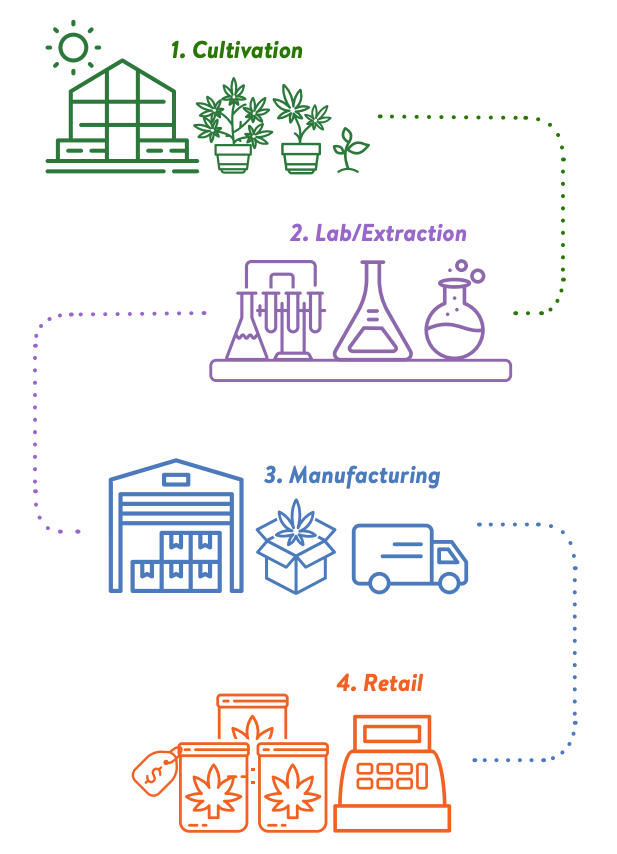
    Since 280E is directly related to the selling or the “trafficking” of cannabis-related products, it impacts retail operations the most. However, it is important to understand the entire “Seed-to-Sale” concept and overall structure to truly understand how your business will be affected. Cannabis verticals are categorized by these functions:

    • Cultivation / Grow
    • Processing / Infusions / Extractions
    • Retail Dispensary
    • Vertically Integrated: Licensed in every area of the cannabis lifecycle, meaning you grow, produce, and sell your products.

    If you wholesale product to another vendor or retailer, this is considered trafficking, and you can be subject to 280E. When calculating deductions, having a DISTINCT separation between these verticals and seed-to-sale job functions will be vital.

    280E Tax Deductions & Deductible Expenses

    Identifying whether deductions can be allocated as Cost of Goods Sold (COGS) can significantly minimize the tax impact of 280E on your cannabis business. If you cultivate, produce, extract, or infuse cannabis, COGS related to the growth and production of goods that are then wholesaled by your business, are potentially subject to 280E. The bulk of activities of cultivation or extraction within a vertically-integrated operation can be considered COGS and transportation and delivery may be considered non-deductible COGS.


    280E COGS Types

    Careful analysis with a cannabis accountant must be done to ensure you’re compiling these deductions while remaining compliant. Here is a suggested list of the types of 280E deductible labor COGS you can leverage:

    • Training
    • Cleaning
    • Trimming
    • Curing
    • Packaging
    • Inventory

    Cannabis cultivators may also claim deductions for:

    • Raw materials and supplies (seeds, clones, fertilizer)
    • Indirect product costs, such as equipment maintenance, utilities used to grow cannabis, supervisory wages, and costs of quality control and inspection

    As a stand-alone dispensary, COGS are limited to the cost of the product and the costs of acquiring the merchandise, including the transportation costs to purchase the wholesale cannabis. You may also CLAIM deductions for electric bills for designated inventory areas.

    From that point on, virtually everything else is subject to 280E scrutiny in the retail environment. Keep an accurate chart of accounts so you can properly code direct and indirect costs in real time. All operators should work with certified cannabis law, tax, and accounting experts to manage 280E.


    Keeping 280E Records

    Accurate recordkeeping will save hours of time and costly mistakes when managing 280E deductions. Ensure you have electronic methods to manage documentation for your workforce, inventory, spending, etc. Report all cash transactions, including:

    • Sales, Wages, Vendor Payment
    • Deposits Over $10,000
    • Payments Over $10,000
    • Single Cash Sale Over $10,000

    Your accountant will work to designate specific COGS and advise you to record detailed COGS deductions and what may or may not qualify. Every step you can take to leverage 280E best practices and authenticate labor hours, COGS, and spending will help offset unnecessary tax overpayments.


    280E Accounting Overview

    When it comes to cannabis accounting 101 and your overall accounting strategy, the inventory accounting method typically provides the most benefits. This method requires producers to capitalize on costs that are both incident to and necessary for production or manufacturing operations or processes.

    Work with a Certified Public Accountant (CPA) to determine the proper inventory capitalization and valuation methods, allocation of expenses, and their impact on the Cost of Goods Sold under Sec. 471.

    Additionally, ensure you fully understand how to avoid money-laundering behaviors, especially as a cannabis operation with multiple Employer Identification Numbers (EINs) or as an all-cash business. Some of the behaviors you will want to avoid may include:

    • Structuring cash-in transactions
    • Using multiple locations to purchase negotiable instruments
    • Trying to withhold or refuse to provide the information needed for Currency Transaction Report (CTR) or Form 8300
    • Providing false information for CTR or Form 8300
    • Volunteering information to financial institutions regarding cannabis-related businesses as a source of income
    • Providing money to a financial institution that has a cannabis odor

    Potential outcomes for violations related to money laundering could include the costs of investigations, losing your cannabis license, civil litigation, or even jail time. Generally, tax audits for cannabis companies are not a matter of if, but a matter of when, so establish clear and concise accounting processes to ensure you’re prepared.


    280E Compliance Cannabis Tracking Software

    Accurate labor tracking through cost centers enables managers to streamline identifying 280E workforce deductions, which can significantly IMPACT the negative effects of the code.

    For example, it’s important to track if a Dispensary Technician spends a few hours in the morning training (deductible) and then begins selling product in the afternoon (non-deductible under 280E). Utilizing employee time and attendance software for cannabis can greatly improve your ability to optimize labor deductions by providing:

    • Self-service on any device employees to track tasks, jobs, and cost centers
    • Pre-built labor reports and audit trails
    • Easy on-screen access to compliance-related data
    • Multi-format data exports for additional systems or accounting software

    Unlike mainstream human capital management solutions, industry-specific cannabis Learning Management System (LMS) software and systems are built to support the complex cannabis regulatory environment and its many training intricacies.

    If 280E is not managed properly, profits can erode quickly by increased tax liabilities… and in some cases, be wiped out completely. Understanding the implications of the code and partnering with experienced cannabis tax advisers is key to operating a compliant, profitable cannabis company.

    Let us know what you think. 

  • Cannabis-Infused Thanksgiving Recipes Guide

    Cannabis-Infused Thanksgiving Recipes Guide

    Thanksgiving is just around the corner, which means it’s time to start thinking about your Thanksgiving menu!

    While turkey, mashed potatoes, and cranberry sauce are something to savor all on their own, there’s one thing that can make these Thanksgiving staples even better: a touch of cannabis.

    Cannabis-infused Thanksgiving dishes are something that can make your Thanksgiving dinner all the MERRIER. Of course, before you serve a cannabis-infused dish, you’ll need to check with your guests (or fellow guests, if you’re headed to a potluck) to make sure they’re all down to get high off your food.

    But once you’ve got the green light, you can use our simple recipes to create a Thanksgiving meal that will be one for the books! Let’s check out our ultimate guide to a cannabis-infused Thanksgiving, full of recipes for cannabis-infused Thanksgiving staples that are sure to delight you.


    Cooking Cannabis-Infused Food

    Before we get into our cannabis-infused Thanksgiving recipe guide, we wanted to give a couple of general notes on cooking with cannabis. If you’re already an experienced cannabis chef, feel free to skip to our recipes below!

    But if you’re new to cooking with cannabis and are trying it for the first time to turn your Thanksgiving into Danksgiving, we recommend this to ensure your cannabis-infused meal is EXPERLY prepared.


    1) On Decarbing Your Cannabis

    First, if you’ve never cooked with cannabis before, know that decarboxylating your cannabis before you infuse it into butter or oil will help you avoid two (2) common issues:

    • Low Potency
    • Poor Taste

    Decarboxylation is a process that allows the Tetrahydrocannabinolic Acid (THCA) – a nonreactive cannabinoid – that naturally occurs in raw cannabis flowers to convert into Tetrahydrocannabinol (THC) – the cannabinoid in cannabis that causes a high. If you need any help with this step we’ve published our Cannabis Edibles and Concentrates (click here to learn more).

    When you smoke cannabis, decarboxylation happens naturally due to heat. But if you were to eat raw cannabis without decarboxylating it first, you would mostly consume THCA rather than THC. So, failing to decarboxylate (or “decarb”) your cannabis before making an edible can lead to a weak or inactive edible.

    Some recipes for cannabis-infused butter or oil include steps that “decarb” to create THC during the ganja infusion process. While this can be effective, we recommend “decarbing” your cannabis before infusing it into butter or oil, since this generally leads to a better taste.

    How To Decarb Cannabis

    One of the easiest ways to “decarb” cannabis is by heating it in your oven, here are the steps:

    1. To use this method of decarboxylation, first, preheat your oven to 245° F (118° C).
    2. Then, place your cannabis buds on a baking tray lined with parchment paper (parchment paper helps prevent sticking).
    3. Next, place your tray in your preheated oven to “decarb” for thirty to forty (30 – 40) minutes.
    4. Every ten (10) minutes remove your tray and gently shake it to mix your cannabis buds and ensure even exposure to heat.
    5. After a total of thirty to forty (30 – 40) minutes, remove your cannabis from the oven and allow it to cool.

    Now, you have “decarbed” cannabis that’s ready to be used in a cannabis butter or oil recipe!


    2) On Cannabis Testing Strength

    If you’re new to cooking with cannabis, understand that it can be hard to know how strong your cannabis-infused butter or oil is without trying it. While many infusion recipes will include how much cannabis you should use, consider this a guideline rather than a definitive amount.

    Even when you use the same amount of cannabis as a recipe suggests, the resulting strength of your infusion can VARY depending on how strong your strain is and how your cannabis bud is exposed to heat during the cooking process.

    Then, additionally, how strong you want your butter or oil to be is very personal. Everyone’s tolerance level is different. You may find that you want your cannabis butter or olive oil to be either more or less potent than the suggested amount of cannabis in your recipe provides.

    Because of all this, we generally recommend testing the strength of your infused ingredients before adding them to recipes (especially if you’re new to cooking with cannabis). You can prepare your cannabis-infused butter or oil a few days BEFORE you plan to cook your Thanksgiving meal, then try a small amount to test its potency and effects.

    That way, you’ll have time to adjust your recipe if you need to. You may decide you want to change the amount of cannabis you use in your recipe, decide to switch to a Sativa versus Indica strain, go with a higher Cannabidiol (CBD) or lower CBD blend, and so on.

    Or, you may just have confirmation that your recipe turned out perfectly the first time! Whatever your results, we recommend making your cannabis-infused butter or oil in ADVANCE, so you’ll have time to make whatever changes you want before serving your recipe to your guests at the big meal.

    Cannabis-Infused Thanksgiving Recipes

    There are so many ways you can infuse classic Thanksgiving dishes with cannabis. One of our favorite ways to easily make any recipe a cannabis one is by incorporating a bit of cannabutter (cannabis-infused butter) into your dish.

    Just by adding a bit of cannabutter, you can quickly make any meal into “green cuisine.” Below, you’ll see our recipe for cannabutter and many stoner-friendly Thanksgiving recipes that incorporate it!


    Cannabutter Recipe

    Ingredients

    • 1 Cup Butter
    • 1 Cup (7 – 10 grams) of Coarsely Ground Cannabis
    • 1 Cup Water

    Steps

    1. Place one (1) cup of water and one (1) cup of butter in a saucepan or stockpot. With your burner on low heat, heat your butter and water until the butter is melted and the mixture is well combined.
    2. Add one (1) cup of coarsely ground cannabis to your butter and water mixture, keeping your burner heat on low. Stir to combine. Allow your mixture to simmer uncovered for two to three (2 – 3 hours), stirring occasionally to ensure your butter does not burn. Your mixture should simmer and never come to a full boil.
    3. Remove the pot from heat and strain the cannabis buds from your cannabis-infused butter using a fine-mesh strainer. Press into the plant matter in the strainer after your initial pour to ensure you squeeze out all the butter.
    4. Allow your cannabutter to come to room temperature, then enjoy it! Your cannabutter can be used immediately or can be stored in the fridge or freezer until you’re ready to use it.

    While we have many recipes that include cannabutter listed below, feel free to use a bit of this cannabutter in any of your favorite Thanksgiving recipes! This delectable cannabutter works well with savory side dishes like casseroles or green beans, and in sweet recipes like apple pie or brownies. More about cannabutter here.


    Creamy Cannabis-Infused Mashed Potatoes

    Ingredients

    • 2 Pound Yukon Gold Potatoes
    • 1/2 Cup Whole Milk
    • 1/2 Cup Heavy Cream
    • 8 Garlic Cloves (Crushed)
    • 5 Tablespoons Unsalted Regular Butter
    • 3 Tablespoons Cannabutter (More or Less, Depending on Potency)
    • 2 Teaspoons Salt
    • Black Pepper (to taste)

    Steps

    1. Peel potatoes and cut them into one (1) inch cubes.
    2. Add potatoes to a large pot and cover with cold water. Bring to a boil over high heat, then reduce heat to low and simmer for twelve (12) minutes.
    3. While your potatoes are simmering, combine milk, heavy cream, and garlic in a small saucepan. Bring to a simmer over low heat. Remove from heat once it simmers, then strain your cream mixture to remove garlic.
    4. Once your potatoes have simmered for twelve (12) minutes, remove them from the heat, and drain. Transfer your drained potatoes back into your pot.
    5. Mash potatoes with a potato masher.
    6. Add your cubed butter, cubed cannabutter, and salt, and stir to combine.
    7. Gradually add your cream mixture to your potatoes little by little until fully incorporated.
    8. Season with black pepper to taste.
    9. Serve and enjoy!


    Delectable Cannabis-Infused Pumpkin Pie

    Ingredients

    • 1 (8 oz) Package of Cream Cheese (Softened)
    • 2 Cups Canned Pumpkin (Mashed)
    • 1 Cup Sugar
    • 1/4 Teaspoon Salt
    • 1 Egg (Plus Two Egg Yolks – Slightly Beaten)
    • 1 Cup Half-and-Half
    • 2 Tablespoons Melted Regular Butter
    • 2 Tablespoons Melted Cannabutter (More or Less Depending on Potency)
    • 1 Teaspoon Vanilla Extract
    • 1/2 Teaspoon Ground Cinnamon
    • 1 Piece Pre-Made Pie Dough
    • Whipped Cream (Topping)

    Steps

    1. Preheat oven to 350 F° (177 C°).
    2. Place your pre-made pie dough into a nine (9) inch pie pan and press down along the bottom and sides. Pinch and crimp edges to create a pie crust pattern. Place the pie shell in the freezer for one (1) hour. Remove from the freezer and fit a piece of aluminum foil inside the pie crust to completely cover the shell. Fill the shell with pie weights (or use dried beans or uncooked rice if you don’t have pie weights). Bake for ten (10) minutes. Remove from oven and remove pie weights and aluminum foil. Bake for another ten (10) minutes or until the pie crust is dried out and beginning to color.
    3. While your pie crust is baking, make your pie filling. In a large mixing bowl, beat cream cheese with a hand mixer. Add pumpkin and beat until combined. Add sugar and salt and beat until combined. Add eggs and egg yolks, half-and-half, melted butter, and melted cannabutter, and beat until combined. Lastly, add your vanilla and cinnamon, and beat until combined.
    4. Pour your pie filling into your prepared pie crust. Bake for fifty (50) minutes or until the center of the pie has set.
    5. Cool to room temperature. Cut and serve, topping with whipped cream if desired.
    6. Enjoy!


    Zesty Cannabis-Infused Cranberry Sauce

    Ingredients

    • 12 Ounces Fresh Cranberries
    • 3/4 Cup Sugar
    • 1 Tablespoon Orange Zest
    • 1/2 Cup Freshly Squeezed Orange Juice
    • 1 Stick Cinnamon
    • 1 Tablespoon Cannabutter (More or Less, Depending on Potency)

    Steps

    1. Rinse cranberries well and place in a heavy-bottomed saucepan with your sugar, orange zest, orange juice, and cinnamon stick. Stir.
    2. Place pan over medium heat. Cover with a lid and cook for fifteen (15) minutes, stirring every five (5) minutes to ensure your sauce doesn’t burn at the bottom of the pan.
    3. Remove the pan from heat and remove the cinnamon stick.
    4. Add in cannabutter and stir until fully melted and combined.
    5. Allow your cranberry sauce to come to room temperature and serve.
    6. Enjoy!


    Canna-Basted Turkey

    Infusing the main event of your Thanksgiving dinner, your turkey, with cannabis is SIMPLE. Just use any turkey recipe that calls for butter during the basting process and swap in a bit of cannabutter in place of some of the recipe’s butter to create the ultimate cannabis Thanksgiving main course.

    When basting your turkey, be sure to work the basting marinade that gathers in your pan (including your cannabutter) under the skin as well as on top of it.

    Ingredients

    Gravy Base

    • 2 Tablespoons (1/4 stick) of Unsalted Butter
    • 2 Pounds of Turkey Necks and/or Wings
    • 2 Cups Diced Onions
    • 1 Cup Diced Peeled Carrots
    • 1 Cup Diced Celery
    • 6 Cups (or More) Low-Salt Chicken Broth

    Turkey

    • 1 Cup (2 Sticks) Butter (Room Temperature and Divided)
    • 2 Teaspoons Minced Fresh Thyme (Plus 15 Fresh Thyme Sprigs)
    • 2 Teaspoons Minced Fresh Tarragon (Plus 5 Large Fresh Tarragon Sprigs)
    • 2 Teaspoons Minced Fresh Rosemary (Plus 5 Fresh Rosemary Sprigs)
    • 2 Teaspoons Minced Fresh Sage (Plus 5 Fresh Sage Sprigs)
    • 1 14 – 16 Pound Turkey
    • 4 Cups Low-Salt Chicken Broth (Divided)
    • 1/4 Cup All-Purpose Flour

    Steps

    Gravy Base

    1. Melt butter in a heavy large deep skillet over high heat. Add turkey necks and/or wings and sauté until deep brown, about fifteen (15) minutes. Add onions, carrots, and celery and sauté until vegetables are deep brown, about fifteen (15) minutes. Add 6 cups of chicken broth and bring to a boil. Reduce heat to medium-low and simmer uncovered for forty-five (45) minutes, stirring occasionally.
    2. Pour gravy base through a strainer set over four (4) cup measuring cups, pressing on solids to extract liquid. If necessary, add enough chicken broth to the gravy base to measure four (4) cups. Gravy base can be prepared two (2) days ahead. Cool slightly then refrigerate uncovered until cold, then cover and keep chilled. Rewarm before using.

    Turkey

    1. Mix one-half (1/2) cup butter and all minced herbs in a small bowl, and season herb cannabutter with salt and pepper. Transfer two (2) generous tablespoons to another small bowl and reserve for gravy; let stand at room temperature.
    2. Set the rack at the lowest position in the oven and preheat to 425° F (218° C). Rinse turkey inside and out; pat dry. Starting at the neck end, slide a hand between the skin and breast meat to loosen the skin. Rub four (4) tablespoons herb cannabutter over breast meat under the skin. Place turkey on a rack set in a large roasting pan. Sprinkle the main cavity generously with salt and pepper. Place four (4) tablespoons of plain butter and all fresh herb sprigs in the main cavity. Tuck wing tips under. Tie legs together loosely. Rub the remaining herb cannabutter over the outside of the turkey. Sprinkle turkey generously with salt and pepper.
    3. Place turkey in the oven and roast for twenty (20) minutes. Reduce oven temperature to 350° F (177° C). Roast turkey for thirty (30) minutes; pour one (1) cup broth over and add one (1) tablespoon plain butter to the roasting pan. Roast turkey for thirty (30) minutes; baste with pan juices, then pour one (1) cup broth over and add one (1) tablespoon cannabutter to the pan. Cover turkey loosely with foil. Roast turkey until a thermometer inserted into the thickest part of the thigh registers 175° F (79° C), basting with pan juices and adding one (1) cup broth and one (1) tablespoon cannabutter to pan every forty-five (45) minutes, about one hour and forty-five minutes (1 hour and 45 minutes) longer. Transfer turkey to platter; let stand thirty (30) minutes – the internal temperature will rise five to ten (5 – 10) degrees.

    Gravy

    1. Strain pan juices into a bowl; whisk in gravy base. Melt reserved two (2) tablespoons herb butter in a heavy large saucepan over medium heat; add flour and whisk constantly until roux is golden brown, about six (6) minutes. Gradually add pan juice-gravy base mixture; increase heat and whisk constantly until gravy thickens, boils, and is smooth.
    2. Reduce heat to medium; boil gently until gravy is reduced to four-and-a-half (4 1/2) cups, whisking often, about ten (10) minutes. Season gravy with salt and pepper.

    Let us know what you think. 

  • Industry Impact & Military Veteran Cannabis Training

    Industry Impact & Military Veteran Cannabis Training

    After a career in the military, veterans are equipped with numerous skills that make them easy to hire for thousands of cannabis industry jobs. At first glance, many people assume (for whatever reason) that the cannabis industry might not seem like an ideal fit for veterans, but that is unfounded, and it’s shaping up to be a fruitful union.

    (Our Military Veteran “Industry Impact Program”)

    Serving in the military can come with its fair share of lasting challenges, whether it be physical, mental, or emotional. A large percentage of veterans report struggling with Post-Traumatic Stress Disorder (PTSD), substance abuse, depression, anxiety, chronic pain or injury, and other debilitating conditions.

    These are all ailments that cannabis has been reported to treat, many falling under the qualifying conditions for medical cannabis programs across the world, but the military’s stigma against the cannabis plant and industry may keep veterans from accessing it to use medicinally.

    More and more veterans have turned to cannabis despite the risk of losing crucial Department of Veterans Affairs (VA) benefits to HELP ease and manage their health symptoms. As veterans have delved further into the cannabis world, they’ve begun making cannabis more accepted and accessible.

    Every military veteran knows that for soldiers who go to war-torn countries, giving their military service to their country, there are repercussions to their health. PTSD is one condition that has plagued so many military personnel, and cannabis aid can be essential to get these soldiers better.

    For most soldiers in the military, cannabis has not been a consideration or option for PTSD, only because there is no awareness, and because of the societal taboo that exists. In the military, the use of cannabis is prohibited and is normally grounds for instant DISMISSAL from the armed services.

    (Check Out Our Military Veteran “Industry Impact Program” Made For Those Who Have Given)

    Our Industry Impact

    Our message is a simple one: Cannabis saves lives, and veterans deserve full legal access, and we want to help!

    Help us change the conversation about cannabis by referring your friends and family who are military veterans to join our Cannabis Industry Veteran Impact Program (click here) and help veterans to get started today.

    Support from programs like ours, helps military veterans to better understand the transformative, life-saving value of cannabis and get their careers started in the industry.

    Prolonged military conflicts over the past years have exposed an aging and ineffective healthcare system, ill-prepared for the type and severity of the latest round of war-related injuries. Upwards of 20 percent of the 2.7 million Iraq and Afghanistan veterans will experience Post-Traumatic Stress Disorder (PTSD) or depression, according to the U.S. Department of Veterans Affairs (VA).

    The VA is not equipped to effectively or comprehensively treat the complexity of every veteran’s mental and physical wounds, leaving former service members to cope with limited and inadequate treatment options. Military veterans are often placated with “cocktails” of prescription drugs to help alleviate their mental and physical symptoms, including powerful and addictive opiates.

    The current arrangement is not meeting veterans’ healthcare needs. In the recent past, military veterans embraced the cannabis industry, but only with limitations to cannabis jobs and security. Now, many of them are receiving cannabis aid and becoming medical cannabis patients for PTSD.

    Veterans who get jobs in the cannabis industry are gems to many business owners because they already have the military training to figure out obstacles and how to maneuver around them. However, cannabis training is still important to do a better job just like for non-military veterans.

    We offer comprehensive military veteran industry training that will help them learn about cannabis to understand its use and its benefits as the armed forces do not support it. Veterans can be SAVED from anxiety and depression after getting out of the military as most have discovered medical cannabis.

    (Check Out Our Military Veteran “Industry Impact Program” Made For Those Who Have Given)

    “Cannabis as a Solution”

    Cannabis is the best aid for men and women who have been in the armed services and were released from their military duties but did not receive any ongoing treatment for their anxiety and depression or other health issues.

    Many of them suffer from serious Post-Traumatic Stress Disorder (PTSD), and that is why you may find them “silently suffering.” Cannabis aid can provide the well-needed solution to relieving that kind of tension, making society safer from such terrible violence.

    We believe our veterans can benefit greatly from cannabis, but the problem is getting them access to use it as medicine. This is where training veterans to grow cannabis is a great solution.

    “Give a man a fish and you feed him for a day. Teach a man to fish and you feed him for a lifetime.” – Chinese Proverb

    It’s no secret that many soldiers have found solace from military-related ailments with medical cannabis: everything from PTSD to slipped discs, to insomnia, has been eased with aid from the versatile plant. In fact, according to a recent study by the American Legion, a vast majority of veterans support both cannabis legalization and further research about its medicinal benefits.

    That kind of SUPPORT for cannabis extends past personal use and into the job market, where veterans are finding themselves increasingly more involved in the industry. This is one of the most direct translations of military skills into the security sector in the cannabis industry.

    There are many federal restrictions on the cannabis industry, leading to the reluctance of financial institutions to open accounts for cannabis-centric companies. This means that a plethora of cannabis companies rely on a strictly cash-only basis and veterans are aptly suited for those responsibilities.

    This, in turn, leads to a demand for a security detail to convoy alongside both the product and the money. This demand has formed a RELIABLE network of security companies that hire hundreds of veterans to simply accompany shipments or outside of brick-and-mortar stores like armed guards.

    There are amazing compassionate programs like Veterans Cannabis Project offering free cannabis to veterans in need, but these types of initiatives are in short supply. Even with dispensaries and growers giving discounts to those who served, we won’t be able to adequately address this problem.

    The best solution is teaching veterans to grow cannabis for their own medical needs. We see the VALUE of home-grown initiatives and have discussed with veterans how they could easily grow their cannabis plants with the right products and industry training that’s required to start working.

    Teaching veterans to grow cannabis would sustain their medical needs as well as provide a hobby that’s beneficial to their health and well-being. Why aren’t we as a community doing this? We want to help lead the charge in veteran-grown cannabis (see our military veterans “Industry Impact Program”).

    We’re not talking about investing in and launching cannabis farms (though we’d certainly entertain the idea). Rather we want to FOSTER a community where veterans can learn how to provide for themselves. If we could gather a group of people who are willing to share their expertise and resources, then we could make a huge impact to make veterans’ everyday lives much better.

    (Check Out Our Military Veteran “Industry Impact Program” Made For Those Who Have Given)

    Cannabis Industry Support Groups

    Are you interested in helping veterans to learn about the cannabis industry? There could be a day when veterans no longer have to wait or rely on others to ensure they have the medicine that brings them well-being. Teaching veterans to grow cannabis and providing them with resources is the best way to solve the problem.

    We want to connect with individuals or companies in the cannabis industry who see the value in such a program as our Cannabis Industry Impact Program (click here) made specifically for military veterans. We have created a unique cooperative and platform that benefits this large community that has sacrificed their lives for our freedom.

    We’re here to conduct online training and offer cannabis industry resources. The opportunities that we can help provide military veterans can be endless (we’re always publishing new training from our Platform Roadmap)! Of course, we want to do this within proper guidelines and government regulations where cannabis is legal, so our team of experts to ensure we stay in good standing. But starting such a military veteran “cannabis growing initiative” shouldn’t be too difficult at all.

    Many cannabis experts think that the communities where many of these veterans live should form support groups at cannabis dispensaries. This will give the affected soldiers new hope for treatment and healing, but education is key to learning what medical cannabis can do to those who suffer.

    If you want to discover the real benefits of cannabis industry training for military veterans, go to our Industry Impact Program (click here) right now to check it out or refer and share it with any military veteran you know. If you’re interested in getting involved in any capacity, please reach out via our contact form (click here).

    (Check Out Our Military Veteran “Industry Impact Program” Made For Those Who Have Given)

    Let us know what you think. 

  • More U.S. States Legalize Cannabis Use

    More U.S. States Legalize Cannabis Use

    The movement to legalize cannabis consumption continued on Election Day as voters in five (5) states approved new laws allowing medical and recreational cannabis use. In Arizona, Montana, and New Jersey – where medicinal use is already permitted – voters approved recreational use.

    Tuesday’s election was a historic victory for cannabis legalization initiatives across the United States. Every cannabis-specific measure on the ballot passed by never-before-seen margins. Before this election, California’s Prop 64 in 2016 had the highest percentage of voter support at fifty-seven percent (57%).

    This year adult-use cannabis passed in Arizona, Montana, New Jersey, and South Dakota by sixty percent (60%), fifty-seven percent (57%), sixty-seven percent (67%), and fifty-three percent (53%), respectively. Public support for medical and adult-use cannabis has reached an all-time high in the United States.

    Mississippi voters decided to legalize medical cannabis in the state, and South Dakota voters agreed to legalize both recreational and medical use. Although all cannabis use is still illegal under federal law, thirty-five (35) states now will allow medical use, and fifteen (15) of those states and Washington, D.C., also will allow recreational cannabis use.

    The election results regarding medical and recreational cannabis use are indicative of the wave of cannabis legalization that we are seeing across the country. New Jersey’s results will likely be the spark to ignite the legalization of recreational cannabis in many eastern states like New York, Connecticut, and Pennsylvania. The Mississippi vote to legalize medical cannabis is also interesting, as other southern states may follow suit.


    Cannabis Laws Vary

    Employers in these newly legalized states will need to review their policies and practices to ensure compliance with new laws. Most states already allow cannabis use for medicinal purposes, but the details of these laws vary.

    Under medical cannabis laws, covered patients and their caregivers generally must receive a certification from a medical practitioner and be registered with the state, but the qualifying medical conditions for which cannabis can be used can differ significantly from state to state.

    States may also pass employment protections to prohibit employers from taking adverse employment actions against employees due to their cannabis use or status as registered medical cannabis patients. New York and New Jersey, for example, have already codified certain employment protections for medical cannabis users.

    Further, employers should also be wary of any potential duty to accommodate medical cannabis users if medical cannabis is legalized. Employers never have to accommodate on-the-job cannabis use, but they may want to change blanket policies that exclude cannabis users from employment.

    Reasonable accommodation may not be available for a given job, but employers may need to make a good-faith effort to find one for registered medical cannabis patients, such as granting time off or altering shifts while the worker is medicated.

    Not surprisingly, state laws also vary greatly when it comes to the recreational use of cannabis. Each state that allows the use of recreational cannabis strictly regulates where it can be purchased and consumed and how much can be grown at home.

    However, that states that allow recreational cannabis use nonetheless make it clear that employers can usually discipline employees for violating a workplace drug policy. Drug-testing procedures may need to be modified as well. Under New Jersey cannabis law, for example, employers must comply with certain notification requirements if an employee tests positive for cannabis use.

    A few jurisdictions, such as New York City and Nevada, prohibit employers from making an adverse hiring decision based on a pre-employment cannabis screen, but they allow for some exceptions. Given the added red tape, some employers may decide to stop testing applicants and employees for the presence of cannabis altogether.

    State-by-State Cannabis Law Reforms

    As most had expected, cannabis reform was a big winner on Election Night. In five (5) states – South Dakota, Mississippi, Arizona, Montana, and New Jersey – voters headed to the polls and let it be known that they want medical or adult-use cannabis.

    And in one (1) state, voters said yes to both cannabis laws at the same time. The cannabis clean sweep appears to signal another momentous milestone for the cannabis movement that now reaches well across the aisle. As cannabis reform moves closer to a bipartisan topic with each election, the five (5) states to pass regulations this time around send several messages to the nation.

    Not only is America ready for legal cannabis, but the message it sent could have been even more substantial had it not been for the pandemic and some lingering opposition in some states. Here’s how the results played out in each state’s ballot questions.


    New Jersey

    After failing to pass adult-use cannabis reform through the legislature in previous years, voters for New Jersey’s new cannabis industry sent lawmakers a loud and clear message. With nearly sixty-seven percent (67%) of the vote, Garden State citizens want lawmakers to finish the job now.

    It does not appear that citizens need to worry about the effort not moving through Congress this time. With the vote looking overwhelmingly likely to pass, reports said that lawmakers began working on the final law before results were announced. On Tuesday, Sen. Nicholas Scutari said he had plans to introduce the bill on Thursday. Plans would then call for a public hearing that Monday.

    Scutari said that the proposed bill is primarily the same as the 2019 proposal, which calls for a roughly eight-and-a-half percent (8.5%) tax rate when state and municipal taxes are combined. Still, several critical specifics of the bill remain to be seen. They include parameters, including home growing.

    New Jersey expects to set off a new wave of legislation in the Northeast. Experts in cannabis and policy spaces often predicted that once one Northeast domino fell, so too would others. If true, then New York, Pennsylvania, and Connecticut could all soon pass similar laws.


    Arizona

    The second time was the charm for Arizona’s new recreational cannabis industry, which failed to pass adult use in 2016. Prop 207, (aka “the pot prop”), passed with sixty percent (60%) of the vote this time around. Ballots must be certified, which could delay an announcement for roughly one (1) month. However, barring a surprise, the measure will pass.

    If so, adults twenty-one (21) and over can possess up to one (1) ounce of flower with a five (5) gram cap on concentrates. The state now has until April 5, 2021, to establish the regulations for its recreational marketplace. Morgan Fox, media relations director for the National Cannabis Industry Association (NCIA), said the state gained significant support this time around. “That’s kind of analogous to how much support we saw in New Jersey,” he noted.


    South Dakota

    South Dakota’s new cannabis industry made American reform history on Election Night. The Mount Rushmore State approved both medical and adult-use ballot questions. Citizens supported the medical measure with sixty-nine percent (69%) of the vote, while adult use earned fifty-three percent (53%).

    No state has simultaneously created a medical and adult-use market. Rather, the common path has been for a state to pass some medicinal laws before recreational would be approved down the line.

    In a press release heralding the dual passing, Erik Altieri, National Organization for the Reform of Marijuana Laws (NORML) executive director, said: “These votes are a stunning rebuke to those elected officials that for decades have refused to move forward with substantive cannabis law reform legislation, and they are yet another indication of the near-universal popularity of these policy changes among voters in all regions of the United States.”

    NORML’s press release also stated that one (1) in ten (10) arrests in the state during 2018 was cannabis-related. South Dakota was not the only conservative state to pass legislation, as two (2) others joined in the effort.


    Montana

    A late October effort to derail Montana’s new cannabis industry for adult use proved fruitless. In the end, Montanans let their voices be heard on two (2) cannabis-related ballot initiatives. In addition to recreational laws, another question sought to set the age of consumption at twenty-one (21).

    Both measures passed. I-90, the effort to pass adult-use laws, was approved with fifty-six percent (56%) of the vote. The law also allows those convicted of cannabis crimes to become eligible for expungement or resentencing. Home cultivation is approved as well, as is a twenty percent (20%) sales tax on products.

    NORML’s Altieri said the win helps demonstrate how cannabis reaches across the aisle. “Cannabis legalization is not exclusively a “blue” state issue, but an issue that is supported by a majority of all Americans – regardless of party politics,” he said in a press release.


    Mississippi

    Mississippi’s new cannabis industry made up the final member in the trio of conservative states to pass cannabis reform laws. The ballot did NOT make it easy either. Voters had two (2) cannabis measures to choose from. While similar in name, the two (2) bills were rather varied in scope.

    A more robust program offered under the advocated-backed Initiative 65 included over twenty (20) qualifying conditions and a two-and-a-half (2.5) ounce possession cap. The government-backed Initiative 65A would set up a narrower plan, covering fewer qualifying conditions, leaving much of the law to be determined by a legislature that was primarily opposed to the measure.

    The vote had an extra hurdle to overcome, as Mississippians had to first vote “YES” on Ballot Measure 1, which indicated an intention to vote on the medical cannabis question. From there, voters had to choose between either Initiative 65 or 65A.

    Nearly sixty-eight percent (68%) of voters chose to vote on the medical measure. Of those who voted, seventy-four percent (74%) opted for Initiative 65. NCIA’s Fox commended Mississippi voters for overcoming a confusing ballot and registering an overwhelming vote for reform. Fox said the huge margin “really shows when the electorate is on the issue.”


    What’s Next For American Cannabis Reform?

    Another wave of cannabis reform could happen in 2022 or 2024. If true, then we could very well likely see cannabis reaching further across the aisle in just a few years. The result could finally cement cannabis as a unifying topic when the nation desperately needs more of them.

    NCIA’s Fox said opposing lawmakers may now need to reconsider the effects of standing in the way of cannabis reform. “I think conservatives, particularly in Congress, have to realize that this issue is gaining steam across the political spectrum,” he said.

    Fox added, “There could potentially be political consequences for trying to impede progress at either the state or federal level.”


    Employers Review Cannabis Policies

    Employers grappling with new cannabis laws should be thinking about three (3) major questions:

    1. If the employer currently conducts drug tests, does it want to continue drug testing if cannabis use is legalized?
    2. What policies will need to be added or updated if new laws are passed?
    3. Will the employer be required to provide reasonable accommodation for registered medical cannabis patients?

    Employers must maintain a safe workplace, and employers who are federal contractors have obligations to comply with the Drug-Free Workplace Act employers should have strong policies in place that address impairment at work.

    It has been widely suggested to treat cannabis use like alcohol or prescription drug use. Cannabis screens don’t show whether someone is currently under the influence like alcohol tests do, so employers should consider stating in their policies that they will discipline an employee who displays behaviors of intoxication or impairment.

    Safety is paramount so employers in these newly legalized states will take a step back and look at policies from a global perspective. Employers shouldn’t sacrifice safety considering the recent trend to legalize cannabis, but which policies will best protect employee health and safety?

    Employers will need to decide whether they will have the same drug-testing policy for every role or if drug testing is more critical for some jobs than others. For example, different policies may apply to office workers than forklift drivers.

    The key takeaway from all of this is that employers need to convey their policies to employees, modify their handbooks to comply with changing laws, and consistently apply discipline.

    Let us know what you think. 

  • Cannabis Waste Compliance & Management

    Cannabis Waste Compliance & Management

    The disposal of cannabis requires both the employee and a witness to dispose of the product – a process derived from medical practices for disposing of unused, post-operational anesthesia narcotics. Procedures and documentation will define what constitutes complete and timely documentation of any cannabis waste.

    An individual witnessing waste disposal should verify the product label, that the volume or amount being wasted matches the inventory documentation, that the product is disposed of physically matches the product in the documentation, and that the disposal occurs per Standard Operating Procedures (SOP) for safe disposal and in a manner that makes the cannabis product irretrievable (or un-usable).

    The entire process of disposal needs to be witnessed and carried out on video, so the individual verifying can be certain that the actual product is being wasted, and not substituted for an adulterated product. Approved methods for wasting cannabis are defined by government laws and regulations, as well as by guidance given by addressing pharmaceutical agents. Key elements of returning, wasting, and disposal of cannabis products include the following components:

    • For defined high-risk areas, waste is witnessed and reconciled with an authorized employee.
    • Approved methods for disposal are defined in policies, local government laws, and cannabis industry regulations of the appropriate authorities in your legal jurisdiction.
    • Procedures should comply with universal precautions and specific organizational cannabis waste disposal requirements that are required to be implemented by regulations.
    • Waste containers with any waste cannabis products are secured to prevent tampering or made otherwise irretrievable whenever cannabis is being wasted for disposal.


    Managing Solid Waste Materials

    Like any other business, cannabis businesses generate a variety of common waste materials. While some cannabis materials need to be disposed of in the trash, others should be recycled or composted whenever possible.

    Cannabis industry regulators have waste disposal ban regulations that ban the disposal of certain materials in the trash. Commonly generated cannabis industry waste that you’ll find is banned from disposal includes cardboard, bottles and cans, paper, and leaves, and yard waste.

    In the cannabis industry, it is considered that the cannabis plant material is a “commercial organic material.” If a cannabis business generates more commercial organic material per week for disposal than what can be managed, it would need to DIVERT all of the cannabis material from disposal, typically to compost or Anaerobic Digestion (or AD) type of operations you’ll find available.

    If a cannabis business generates a manageable amount of plant material waste, the material may be disposed of in the trash, although it is still encouraged that material is composted whenever possible.


    Waste Composting and Anaerobic Digestion

    For proper waste disposal, cannabis plant parts and associated materials are sent for composting or Anaerobic Digestion (or AD), but they must first be ground and mixed with other organic materials such that the material is rendered UNUSEABLE. Other organic materials may include growing media, soil, mulch, food waste, or agricultural material such as manure or other materials.

    Typically, there are no unique requirements for hauling the cannabis material to compost or anaerobic digestion facility. The best place to start is to check with haulers that currently service businesses in the area, though ideally, cannabis businesses should work with a hauler that has experience hauling other similar organic materials. A hauler can help you determine which facility to deliver your material to, as well as the number and size of containers you need to meet your cannabis waste needs.

    In some cases, it may work well for a cannabis business to compost materials on-site. Composting on-site REQUIRES sufficient space to construct and maintain a compost pile, as well as additional materials to mix with cannabis plant material to compost successfully in the industry.

    Solid Cannabis Waste Disposal

    The cannabis business requirements for disposing of solid cannabis waste operations are similar to those for sending it to composting or Anaerobic Digestion (or AD). The cannabis waste MUST be ground and mixed with other solid wastes so that the material is rendered unusable. Suitable materials for mixing cannabis wastes for disposal include food waste, coffee grounds, manure, sawdust, or growing media.

    The best approach is to work with your existing waste hauler to provide this collection service. Cannabis wastes mixed with other solid waste can be brought to any permitted transfer station, landfill, or municipal waste combustion facility for disposal. Your solid waste hauler will typically determine the best nearby facility to deliver the waste to for disposal. A hauler can also help you determine what number and size of containers you need to meet your needs in the industry.

    Waste Storage, Documentation, and Recordkeeping

    Cannabis wastes should be stored in a secure and locked container and location before collection. It is required that at least two (2) cannabis business agents must witness and document how cannabis waste is handled. The same regulation requires your business to develop and maintain records about:

    • How cannabis waste is secured before collection for disposal management
    • The date the material is sent for composting, anaerobic digestion, or disposal
    • The type and amount of cannabis material managed during the disposal process
    • The name, location, and type of facility to which the material was delivered (the facility can provide a scale or load ticket that includes all of this information)
    • The manner of cannabis material disposal or waste handling and management
    • The names and signatures of the two (2) agents who witness material management


    Hazardous Waste Management

    Cannabis businesses may also generate some wastes that need to be managed as hazardous wastes. This may include spent lighting, pesticides, solvents, used oil, or other chemicals used in facility operation and maintenance.

    Hazardous waste regulations include provisions governing storage (how much material and for how long), labeling, manifest, transportation, and FINAL management and disposal. If you generate hazardous waste, you will need to determine how much waste you may accumulate at your site at one time, and how quickly you need to ship all of the cannabis materials off-sites for recycling or disposal.

    Managing Liquid Waste

    Liquid waste containing cannabis or by-products of cannabis processing shall be disposed of in compliance with all applicable government and local law requirements. These requirements will depend on how liquid cannabis material waste from a facility is being managed, whether this disposal is discharged via a sewer connection, holding tank, or groundwater or surface water.

    Cannabis Product Packaging

    It is recommended that recyclable and compostable packaging be used for cannabis products. For recycling, cannabis regulators will MAINTAIN educational guidance that summarizes what types of packaging are recyclable at recycling facilities. For compostable packaging, search the Internet for organizations that verify compostable packaging that is used in the cannabis industry.

    Let us know what you think. 

Do NOT Grow Another Plant Until You've Enrolled Into This! 💯
Cannabis Horticulture
A Carefully Curated Cultivation "Crash Course" On Everything You Need To Crank Out High-Yielding, "Cannabis-Cup Winner" Flowers That'll Generate HUGE Crops All-Year Long
Crafting Cannabis-Infused Edibles Takes MORE Than Ingredients... 🍽️
Edible Cannabis Products (100% FREE Training)
Enthusiasts Face Challenges Navigating An Ever-Expanding Array Of Cannabis Products & Delivery Methods From "Raw Flower" Smoothies To Infused-Edibles, Cannabinoid-Based Drinks + MORE.