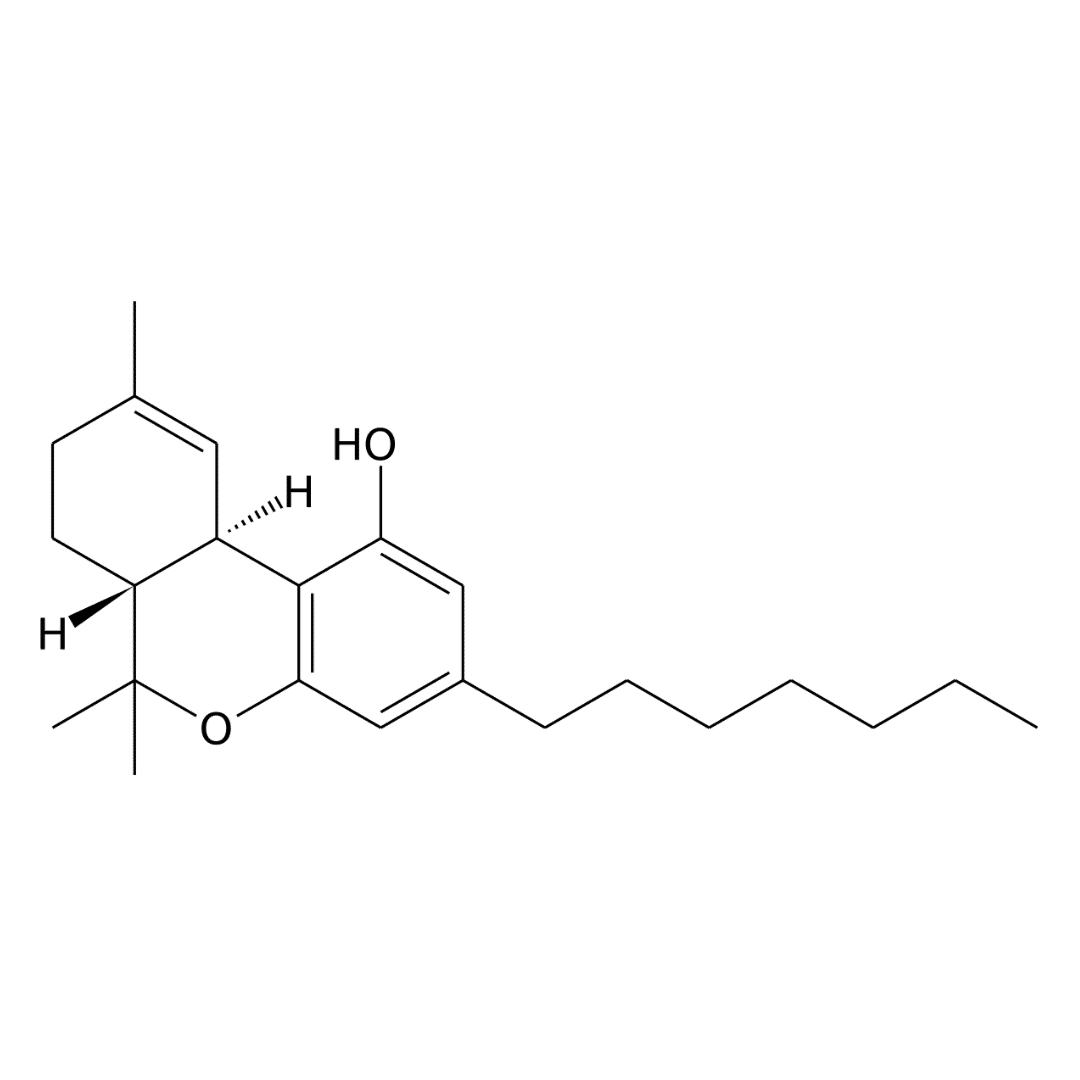
It is a potent phytocannabinoid, a Cannabinoid Type-1 (CB1) and Cannabinoid #1excludeGlossary (CB2) agonist which was known as a synthetic homologue of THC, but for the first time in 2019 was isolated as a natural product in trace amounts from Cannabis sativa. It is structurally similar to ?9-THC, the main active component of cannabis, but with the pentyl side chain extended to heptyl. Since it has a longer side chain, its cannabinoid effects are “far higher than ?9-THC itself.” Effects in mice are “hypomotility, analgesia, catalepsy and decreased rectal temperature”, similar to those of THC and the endocannabinoid, 2-AG. The affinity was discovered, but the efficacy is not yet known. Therefore, it is not yet known if THCP is intoxicating. The corresponding heptyl homologue of cannabidiol was also identified in the same study and named Cannabidiphorol (CBDP).
Here's
Frequently Asked Questions
1

ChatGTP
ChatGPT integration is also compatible with the Double-click feature. It means that when the user clicks on any word on the page, a tooltip will appear with an automatically generated definition by ChatGPT, even if the term is not defined as a glossary term.
2

Languages
Community “Wiki” terms can have multiple versions (ex. English, Spanish, French, etc.) so you can easily switch between languages & supports UTF-8 to use virtually all characters, even symbols (ex. mathematical operators, music notation, etc.).

Standards
Our Wiki follows WCAG 2.0 recommendations & it allows users with disabilities to navigate between terms using the keyboard & by adding ARIA attributes to help screen readers understand the context.
Need some answers?
What is this "Wiki" & how does the cannabis community benefit?
The Green CulturED Wiki enables you to explore, learn, and share through a knowledge base tailored to the cannabis industry. It functions like an encyclopedia, lexicon, glossary, wiki, or dictionary. This tool is useful for industry learners and professionals to learn more about resources, programs, and terms specifically in the cannabis sector.
Can anyone add or edit a new term to the community "Wiki"?
Yes, new terms can be added by crafting individual entries, each with its own dedicated page and unique URL. By sharing resources, information, and industry information, users are able to foster community, growth, and learning. Once submitted, a glossary term is reviewed by the Green CulturED team, which will then approve or deny the submission.
Are there restrictions on "Wiki" terms or content-type(s) that be added?
While the Green CulturED Community Wiki does not impose specific content restrictions, it is essential to adhere to general web content guidelines, which include avoiding misinformation and respecting copyright laws. For cannabis-related glossaries, it’s critical to ensure the accuracy and legality of the information presented. In addition, common courtesy and “netiquette” are part of our community user agreement, and it is crucial to maintain those levels of respect when adding new terms, comments, etc.
What are the "Wiki" categories for different cannabis terms?
Glossary term categories serve as a reference tool that enhances usability, navigability, and educational value by organizing terms into groups such as industry brands, consulting firms, and seed banks.
How can I comment on or discuss about a "Wiki" term?
What should I do if there's incorrect or outdated information in a "Wiki" term?
How are user-contributed terms reviewed and "Wikis" managed?
Frequently Asked Questions