
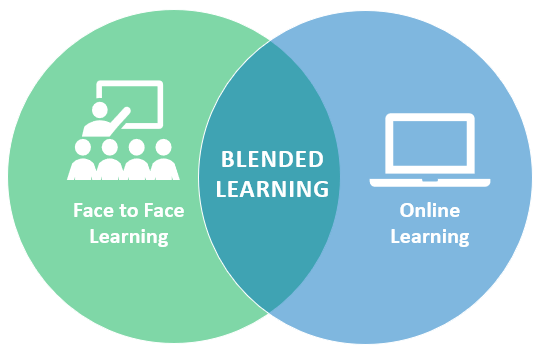

 The word ‘blended’ does not always sit well with learners. On the label of certain products, it can convey ideas of subpar quality, of the ‘real thing’ being diluted with lesser versions and this concern can extend to online learning.
Systems and approaches promoted as ‘blended’ also arouse certain suspicions. Are they set up to lower the cost of instructors? Do they have a strategic value other than mass-producing certifications?
It is up to the cannabis industry to ensure that the ‘blended’ qualifier points to positive and desirable attributes, as was likely the case when it was first coined. The following scenarios show you how an eLearning solution can help sustain the idea of blended learning as innovative, sophisticated, and fun.
Trailblazing and Basecamp
 While most of us agree that one of the most valuable moments of a learning intervention is quality time with a Subject Matter Expert (SME), it is also important to acknowledge that teaching models often do not make the most out of their limited and expensive time.
Blended offerings, especially those that tout themselves as ‘low cost’ are better off focusing on how its model optimizes, say, instruction time. The best expression of a blended learning model gives learners access to #1excludeGlossary expertise that was not possible before, at a lower cost.
An eLearning solution can help spread the wisdom of experts without taking up more of their time. A mixed-use of the ‘Forum’ and the ‘Wiki’ Activities can ensure teachers address quality questions personally and save them for future reference of the whole class, so they are only answered once.

Dynamic Enforcement
 Think of it as the inversion of the above scenario. Most professional situations require the employee to perform their job within professional and regulatory guidelines. In many cutting-edge fields, the guidelines evolve often. The organization’s challenge is to provide its staff with tools and up-to-date information to perform professionally.
The classic eLearning activities ‘Book’ and ‘Quiz’ activities can help workers cram critical information for eventual practical use. While in the previous approach, eLearning solutions are a conduit between expert and learner, here the expert can be involved in practical situations and skip lecturing, which has been found less effective than computer-based methods, #6excludeGlossary.
Personal Blends
 If you are offering the best of both worlds, wouldn’t it make sense to let students decide what works best for them? eLearning solutions and similarly featured Learning Management Systems (LMS) offer ways to prevent fixed combinations of computer and face-to-face learning. Of course, you still need to find methods that work best for your employees.
An eLearning solution’s ability to override automatic grading lets teachers consider special cases or multiple ways to account for student work. A bolder approach is to apply rubrics or multi-dimensional grading, and let learners focus on honing a subset of skills (or even just one, if it makes sense) rather than making it mandatory.
Let us know what you think.