
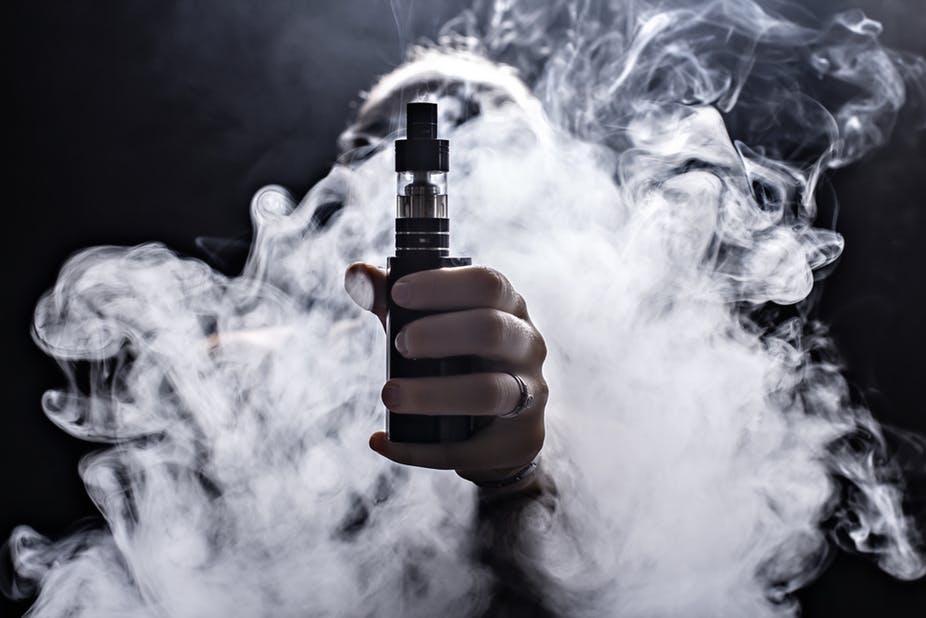

 Smoking has been banned from most workplaces for a long time, but vaping presents new issues for employers in the cannabis industry. So should the smokeless alternative to cigarettes be treated like cigarettes?
Cannabis industry employers should consider government and local laws, company culture, health risks, and accommodations when developing their e-cigarette policies, as most employment law attorneys recommend.
Electronic cigarettes (which are also called e-cigarettes, e-cigs, vaporizers, and electronic nicotine delivery systems) are battery-operated devices that sometimes look like a traditional cigarette, a pen, or a USB flash drive but can take on a variety of other forms.
Users puff them to inhale an aerosol that usually contains nicotine, flavorings, and other chemicals – though not all e-cigarettes contain nicotine. The use of these devices is commonly called vaping. The trend that we’ve seen is that cannabis industry employers are generally treating e-cigarette use the same as how they treat the use of traditional cigarettes.
This is not without controversy since there is limited data about the health risks associated with the use of #6excludeGlossary.
Is Vaping Harmful?
 E-cigarette use has the potential to benefit some people and harm others, according to the Centers for Disease Control and Prevention (CDC). Vaping might benefit adult smokers who use e-cigarettes as a complete replacement for traditional cigarettes, but “scientists still have a lot to learn about whether e-cigarettes are effective for quitting smoking,” the CDC said on its website.
The U.S. Food and Drug Administration (FDA) has not approved e-cigarettes as a #11excludeGlossary product. The CDC does say that vaping can be harmful to children, pregnant women, and adults who have never used nicotine products.
The American Lung Association cautions that vaping may pose secondhand-emissions risks. But more research needs to be done. “While e-cigarettes may be less harmful than regular cigarettes, this does not mean that they are harmless,” according to the National Cancer Institute.
Check Government and Local Law
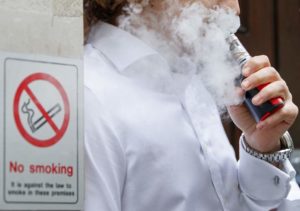 Depending on their location, employers may have the discretion to treat vaping as they want, but employers should consider government and local regulations when developing a policy. Some jurisdictions broadly prohibit vaping in places where smoking is banned.
Other states ban vaping in specific places such as childcare facilities, state government buildings, schools, and enclosed workspaces. Some local municipalities also have enacted bans on e-cigarettes in enclosed workplaces. As a result, in some jurisdictions, allowing e-cigarette use in the workplace would be unlawful.
If a government hasn’t instituted any regulations, as with any workplace policy, cannabis industry employers should make sure they understand their organization’s goals so they can tailor policies and practices to reach those objectives.

Workplace Policies on Vaping
 Some employers don’t have explicit policies or haven’t carefully considered how they want to treat vaping. Other cannabis industry employers superficially added it to the smoking policy. Employers should consider the pros and cons of treating e-cigarette use as they treat the use of traditional tobacco products.
On one hand, workers may be more efficient if they can vape at their workstations and not take as many breaks. On the other hand, an employer may find it disconcerting for employees to puff on e-cigarettes at work since an e-cigarette is still a means of disposing of an addictive chemical.
Some employees could react to the chemical byproduct that a co-worker’s e-cigarette emits. Requests for accommodation due to odor and chemical sensitivities are becoming more frequent under the Americans with Disabilities Act (or ADA). Permitting e-cigarette use could require employers to engage in an interactive process and potentially grant accommodations to employees who feel ill by others’ vaping.
Additionally, safety issues could arise with e-cigarette use in certain workplaces, such as those containing combustible materials, due to the ignition and heating elements in e-cigarettes. Moreover, if an employer’s workplace is public-facing, it may have legitimate concerns about the image of employee e-cigarette use projects.
Set Clear Guidelines
 Employers should evaluate their smoking policies (including cannabis impairment policies) to ensure clarity about the scope of the products covered and what areas of the worksite are covered by any smoking ban. Consider whether employees can bring e-cigarettes into certain areas, or if they are completely banned from the property.
If a workplace already has a clean-air policy, but it doesn’t reference e-cigarettes, employees may be confused about whether vaping is covered. It’s probably time to revise the language, just like you should have policies for cannabis consumption in the workplace.
Additionally, employees should typically be informed of any changes in workplace policies before they take effect so 60 to 90 days notice is a good rule of thumb, but some states have specific rules employers should incorporate.
Let us know what you think.