
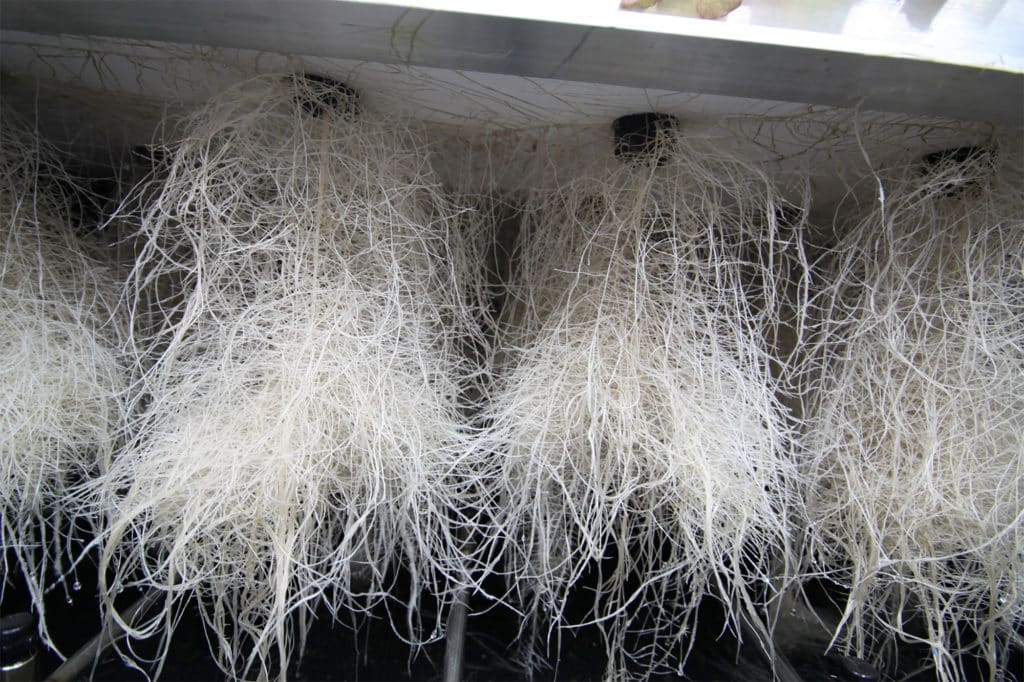

 Aeroponics is a method of growing cannabis plants that use no medium for the roots. It’s a style of hydroponic gardening where the roots are suspended in the air as the nutrients and water are delivered via a system that continually mists the roots.
This growing method was first discovered as a way to study plants’ root systems in the first half of the 20th century. Initially, there was no thought of utilizing aeroponics beyond root-based research, but this changed over the years and aeroponics has since become a respectable and beneficial way to cultivate plants.
How Do Aeroponic Growing Systems Work?
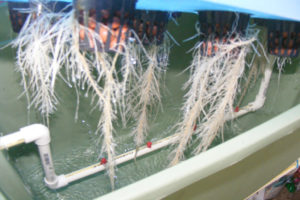
 As mentioned, aeroponics works by suspending the roots in the air and applying nutrients and water with a fine mist. The dissolved nutrients in the water in combination with the water itself, sunlight, CO2, and oxygen are enough to keep a cannabis plant healthy and thriving as long as the roots continuously receive moisture.
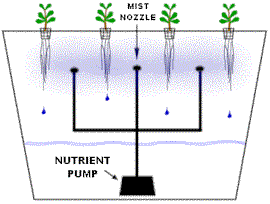
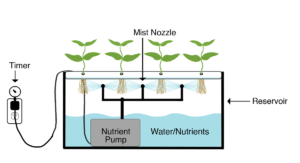
To accomplish this, aeroponic systems have a specific setup. The system is composed of two main features: the reservoir and the planter bed. The reservoir is where the water supply is stored and checked for quality and nutrient levels, and the planter bed is where the plants are grown.
Planter beds can come in many designs but their foremost features include a misting system, drainage system, and a system for supporting and separating the roots from the plant. Finally, to connect the two, pumps are used to continuously exchange water.
To start, a seedling grown in a medium (ex. a Rockwool cube) will be placed in net cup pots that separate the inside and outside of the planter bed. A collar is then placed around the base of the stalk. This collar helps to prevent the mist in the bed from evaporating or molding the stalk while protecting the roots from getting infected or damaged.
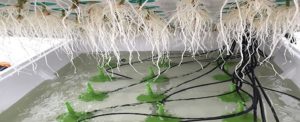
From this point, the roots will grow out of the Rockwool and through the net cup while the plant grows upward away from the bed. The water used to feed the new plants is delivered through water lines with spray nozzle attachments that insert into the planter bed.
When coming out of the nozzles, the water is made into a fine mist that then blankets the root systems of the plant. The excess moisture collects on the bottom of the planter bed and drains back into the reservoir to be recycled.
It should be noted that some systems are designed to use the bottom of the planter bed as the reservoir and then pump the water directly back into the water lines. This style will work fine; however, it is more difficult to check the reservoir without disrupting the roots.

Aeroponics Advantages and Disadvantages
 While there is a laundry list of benefits that come with growing cannabis using aeroponics, this method of gardening is not easy for beginners. Growers should have a vast knowledge of cannabis plants and adequate funds to produce a quality product from aeroponics. It’s important to realize that this method requires close attention to detail, and therein lies many of its difficulties.
Aeroponic growing systems are based on a continual application of mist to the roots, thus requiring that the system stays active 24/7. Power outages, broken pumps, clogged nozzles, and empty reservoirs can all derail your garden. Roots without moisture will start dying within the hour.
Systems must be in place to alert you of failures, and someone should be on hand to repair the issues presented, making aeroponics generally a costly means of growing cannabis. Additional hurdles include mold in the planter box and knowing when and how to properly feed your plants.
However, numerous benefits come with growing your cannabis with aeroponics. Your roots are in full contact with oxygen at all times and roots thrive on oxygen. Also, the nutrients dissolved in the water are being directly applied to the roots, making them readily available for the cannabis plant’s uptake.
Aeroponics allows plants to be placed closer together as they are not fighting for soil territory. The lack of soil also makes for quick and easy harvests and prevents pests commonly associated with soil from ever entering your cannabis grow space. Finally, aeroponics uses a very limited amount of water as all the water not being taken in by the plants is recycled.
Quality of Cannabis Grown with Aeroponics
 Aeroponic systems are known for the quality product they produce. The combination of growing inside and applying nutrients directly to the roots allows for the development of large, healthy buds.
Flowers grown with aeroponics are known to blossom with ripe trichomes and in high yields, which make for a lucrative and desirable end product. However, sometimes they can lack the complex flavors that can be found by growing in soil.
Let us know what you think.