
Embed Code

Social Share

**Apollo 11**

In the cannabis lexicon, Apollo 11 is a celebrated sativa-dominant hybrid strain that draws inspiration from the iconic lunar mission of the same name. This strain is renowned for its ability to launch users into a state of heightened awareness and creativity, akin to the pioneering spirit of the astronauts who first set foot on the moon. The lineage of Apollo 11 can be traced to its parent strains, Genius and Cinderella 99, both of which contribute to its unique profile of citrusy and earthy flavors. Over the years, Apollo 11 has become synonymous with exploration and innovation within the cannabis community, offering a cerebral high that encourages productivity and focus. As the cannabis landscape shifts and grows, Apollo 11 continues to be a go-to choice for those seeking an invigorating experience that mirrors the adventurous essence of its namesake mission. [Source: Leafly, Wikileaf]

Edit Wiki Term

Apollo 11 (Wikipedia)

Apollo 11 (July 16–24, 1969) was the fifth manned flight in the United States Apollo program and the first spaceflight to land humans on the Moon. Commander Neil Armstrong and Lunar Module Pilot Edwin "Buzz" Aldrin landed the Lunar Module Eagle on July 20 at 20:17 UTC, and Armstrong became the first person to step onto the surface about six hours later, at 02:56 UTC on July 21. Aldrin joined him 19 minutes afterward, and together they spent about two and a half hours exploring the site they had named Tranquility Base upon landing. They collected 47.5 pounds (21.5 kg) of lunar material before re-entering the Lunar Module. In total, they were on the Moon's surface for 21 hours, 36 minutes before returning to the Command Module Columbia, which remained in lunar orbit, piloted by Michael Collins.

Apollo 11
Buzz Aldrin on the Moon in a photograph taken by Neil Armstrong, who can be seen in the visor reflection along with Earth, the Lunar Module Eagle, and the U.S. flag
Mission typeCrewed lunar landing (G)
OperatorNASA
COSPAR ID
SATCAT no.
  • CSM: 4039
  • LM: 4041
Mission duration8 days, 3 hours, 18 minutes, 35 seconds
Spacecraft properties
Spacecraft
Manufacturer
Launch mass109,646 lb (49,735 kg)
Landing mass10,873 lb (4,932 kg)
Crew
Crew size3
Members
Callsign
Start of mission
Launch dateJuly 16, 1969, 13:32:00 (1969-07-16UTC13:32Z) UTC (9:32 am EDT)
RocketSaturn V SA-506
Launch siteKennedy, LC‑39A
End of mission
Recovered byUSS Hornet
Landing dateJuly 24, 1969, 16:50:35 (1969-07-24UTC16:50:36Z) UTC
Landing site
Orbital parameters
Reference systemSelenocentric
Periselene altitude100.9 km (54.5 nmi; 62.7 mi)
Aposelene altitude122.4 km (66.1 nmi; 76.1 mi)
Inclination1.25°
Period2 hours
EpochJuly 19, 1969, 21:44 UTC
Lunar orbiter
Spacecraft componentApollo command and service module
Orbital insertionJuly 19, 1969, 17:21:50 UTC
Orbital departureJuly 22, 1969, 04:55:42 UTC
Orbits30
Lunar lander
Spacecraft componentApollo Lunar Module
Landing dateJuly 20, 1969, 20:17:40 UTC
Return launchJuly 21, 1969, 17:54:00 UTC
Landing site
Sample mass47.51 lb (21.55 kg)
Surface EVAs1
EVA duration2 hours, 31 minutes, 40 seconds
Docking with Lunar module
Docking dateJuly 16, 1969, 16:56:03 UTC
Undocking dateJuly 20, 1969, 17:44:00 UTC
Time docked96 hours, 47 minutes, 57 seconds
Docking with Lunar module ascent stage
Docking dateJuly 21, 1969, 21:35:00 UTC
Undocking dateJuly 21, 1969, 23:41:31 UTC
Time docked2 hours, 6 minutes, 31 seconds
Circular insignia: eagle with wings outstretched holds olive branch on Moon with Earth in background, in blue and gold border.
Mission insignia
This official Apollo 11 crew portrait shows astronauts Neil Armstrong, Michael Collins, and Buzz Aldrin in their white NASA spacesuits, posed against softly lit backdrop of the Moon. Armstrong (left) and Aldrin (right) are seated, while Collins stands behind them at center. Each suit displays the astronaut’s name tag, the NASA insignia, and the American flag on the sleeve, with colored connectors visible on the chest.
Left to right: Armstrong, Collins, and Aldrin

Apollo 11 was launched by a Saturn V rocket from Kennedy Space Center in Florida, on July 16 at 13:32 UTC (9:32 am EDT, local time). The Apollo spacecraft consisted of three parts: the command module (CM), which housed the three astronauts and was the only part to return to Earth; the service module (SM) providing propulsion, electrical power, oxygen, and water to the command module; and the Lunar Module (LM), which had two stages—a descent stage with a large engine and fuel tanks for landing on the Moon, and a lighter ascent stage containing a cabin for two astronauts and a small engine to return them to lunar orbit.

After being sent to the Moon by the Saturn V's third stage, the astronauts separated the spacecraft and traveled for three days until they entered lunar orbit. Armstrong and Aldrin then moved into Eagle and landed in the Mare Tranquillitatis on July 20. The astronauts used Eagle's ascent stage to lift off from the lunar surface and rejoin Collins in the command module. They jettisoned Eagle before performing the maneuvers that propelled Columbia out of the last of its 30 lunar orbits onto a trajectory back to Earth. They returned to Earth and splashed down in the Pacific Ocean on July 24 at 16:35:35 UTC, after more than eight days in space.

Armstrong's first step onto the lunar surface was broadcast on live television to a worldwide audience. He described it as "one small step for [a] man, one giant leap for mankind." Apollo 11 provided a U.S. victory in the Space Race against the Soviet Union, and fulfilled the national goal set in 1961 by President John F. Kennedy: "before this decade is out, of landing a man on the Moon and returning him safely to the Earth".


Apollo 11, A11, Moon Landing Strain, Lunar OG, Space Bud
Here's
Frequently Asked Questions

1

ChatGTP

ChatGPT integration is also compatible with the Double-click feature. It means that when the user clicks on any word on the page, a tooltip will appear with an automatically generated definition by ChatGPT, even if the term is not defined as a glossary term.

2

Languages

Community “Wiki” terms can have multiple versions (ex. English, Spanish, French, etc.) so you can easily switch between languages & supports UTF-8 to use virtually all characters, even symbols (ex. mathematical operators, music notation, etc.).

3
Standards

Our Wiki follows WCAG 2.0 recommendations & it allows users with disabilities to navigate between terms using the keyboard & by adding ARIA attributes to help screen readers understand the context.

Need some answers?
What is this "Wiki" & how does the cannabis community benefit?

The Green CulturED Wiki enables you to explore, learn, and share through a knowledge base tailored to the cannabis industry. It functions like an encyclopedia, lexicon, glossary, wiki, or dictionary. This tool is useful for industry learners and professionals to learn more about resources, programs, and terms specifically in the cannabis sector.

Yes, new terms can be added by crafting individual entries, each with its own dedicated page and unique URL. By sharing resources, information, and industry information, users are able to foster community, growth, and learning. Once submitted, a glossary term is reviewed by the Green CulturED team, which will then approve or deny the submission. 

While the Green CulturED Community Wiki does not impose specific content restrictions, it is essential to adhere to general web content guidelines, which include avoiding misinformation and respecting copyright laws. For cannabis-related glossaries, it’s critical to ensure the accuracy and legality of the information presented. In addition, common courtesy and “netiquette” are part of our community user agreement, and it is crucial to maintain those levels of respect when adding new terms, comments, etc.

Glossary term categories serve as a reference tool that enhances usability, navigability, and educational value by organizing terms into groups such as industry brands, consulting firms, and seed banks.

The Green CulturED Wiki supports comments on individual glossary terms, enabling users to engage in discussions or leave feedback. This feature fosters collaborative learning and knowledge sharing within the cannabis community.
If you encounter incorrect or outdated information, please contact the site administrators directly or use the commenting feature to report inaccuracies for review and correction. Green CulturED Wiki allows for revisions, enabling updates and corrections.
Green CulturED Wiki utilizes user rights and capabilities for managing and reviewing user-contributed terms. Administrators can set specific permissions and establish review processes according to their policies.
Frequently Asked Questions
"Contribute & Edit/Update Our Community Wiki That Provides An Extensive Knowledgebase Where You'll Find Cannabis Industry Terms & Definitions..."
Do NOT Grow Another Plant Until You've Enrolled Into This! 💯
Cannabis Horticulture
A Carefully Curated Cultivation "Crash Course" On Everything You Need To Crank Out High-Yielding, "Cannabis-Cup Winner" Flowers That'll Generate HUGE Crops All-Year Long
Crafting Cannabis-Infused Edibles Takes MORE Than Ingredients... 🍽️
Edible Cannabis Products (100% FREE Training)
Enthusiasts Face Challenges Navigating An Ever-Expanding Array Of Cannabis Products & Delivery Methods From "Raw Flower" Smoothies To Infused-Edibles, Cannabinoid-Based Drinks + MORE.
",__litespeed_var_4__="0bf8e34d1b";

As the cannabis industry strives to ensure a safe and inclusive dispensary workplace for everyone, they should note that some harmful bullying behaviors that aren’t technically unlawful harassment can still be addressed in a workplace civility policy.

An employer’s cannabis dispensary’s policies can be more protective of employees than the law can and if having a workplace free from bullying is important to employers, they can go a long way to achieving that by modeling behavior, having a good policy, and enforcing that policy.


What Is Bullying?
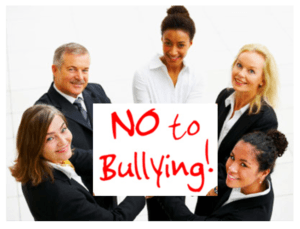
Bullying is generally defined as unwelcome behavior that occurs over some time and is meant to harm someone who feels powerless to respond. Verbal bullying includes teasing and threatening to cause harm, according to stopbullying.gov, a website managed by the U.S. Department of Health and Human Services.

Social bullying in the workplace might happen by leaving someone out of a meeting on purpose or publicly reprimanding someone. A survey by the Workplace Bullying Institute estimated that 61 percent of employees are aware of abusive conduct in the workplace, 19 percent have experienced it and another 19 percent have witnessed it.

These behaviors may or may not constitute unlawful harassment. Bullying is actionable under federal law only when the basis for it is tied to a protected category, such as race or sex. Specifically, Title VII of the Civil Rights Act of 1964 prohibits harassment based on color, national origin, race, religion, and sex.

Other federal laws prohibit such behavior based on age, disability, and genetic information. Additionally, if bullying amounts to some other civil or criminal wrongs, such as assault or battery, it could amount to a claim under state law.

So a manager who is mean to everyone – who is sometimes known as the “equal opportunity harasser” – might not be engaging in unlawful conduct. But that doesn’t mean it must be tolerated in the workplace. Bullies can create morale problems and other workplace issues.

Cannabis industry employers can have codes of conduct that address respect in the dispensary workplace and hold employees accountable if they do not treat others with respect.

Local Law Trends
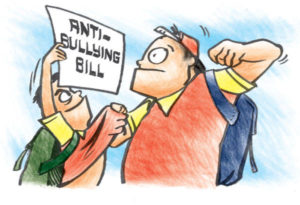
In the absence of federal legislation prohibiting generic workplace bullying, several states are considering legislation that would provide severely bullied employees with a claim for damages if they can prove that they suffered mental or physical harm as a result of the bullying.

Legislatures in local jurisdictions have introduced workplace anti-bullying bills in recent years that would prohibit all “abusive conduct” against employees – even if it isn’t based on a protected characteristic. Public employers are immune from liability if they adopt a policy that is compliant with the statute, though individuals would remain liable despite the adoption of the policy.

It would not be surprising to see more laws requiring employers to train employees on anti-bullying. However, legislation that creates a separate cause of action for bullying unconnected to a protected class could open the floodgates for lawsuits by employees who feel their boss is abusive or even just unfair or mean.


Dispensary HR’s Role

Even without a law against general bullying, employers can create policies and practices to prevent and prohibit such behavior. It is suggested that cannabis industry employers:

  • Conduct a climate survey to learn about the problems in their particular dispensary workplace and use the survey’s findings to tailor policies and procedures to that dispensary workplace.
  • Adopt clear, written anti-bullying policies in as many languages as are spoken in the workplace.
  • Foster an organizational culture that prioritizes inclusion and doesn’t tolerate bullying by regularly demonstrating a commitment to anti-bullying policies.
  • Conduct bystander intervention training, which empowers co-workers to intervene when they witness bullying or harassing behavior. This helps create a sense of collective responsibility for eliminating bullying and other problematic behavior in the workplace.
  • Conduct workplace civility training, which may reduce the likelihood that bullying will occur by promoting respect among employees from different backgrounds and at different job levels.
  • Implement clear and straightforward procedures so that employees know how and where to report incidents.
  • These procedures should include multiple confidential reporting channels.
  • Make an effort to maintain dispensary employees‘ confidentiality throughout the investigation. If employees need to be identified, investigators should notify employees about the possibility that co-workers will learn about their complaints.

Dispensary workers who are victims of bullying or harassment should know they can promptly report incidents to their supervisors, management-level employees, human resource representatives, or other employees designated to receive reports.

Let us know what you think.

Do NOT Grow Another Plant Until You've Enrolled Into This! 💯
Cannabis Horticulture
A Carefully Curated Cultivation "Crash Course" On Everything You Need To Crank Out High-Yielding, "Cannabis-Cup Winner" Flowers That'll Generate HUGE Crops All-Year Long
Crafting Cannabis-Infused Edibles Takes MORE Than Ingredients... 🍽️
Edible Cannabis Products (100% FREE Training)
Enthusiasts Face Challenges Navigating An Ever-Expanding Array Of Cannabis Products & Delivery Methods From "Raw Flower" Smoothies To Infused-Edibles, Cannabinoid-Based Drinks + MORE.